There is a certain kind of woman who owns three Pattu silk sarees. One from her wedding. One from her mother. And one she bought for herself the year she got her first proper salary. She wears them twice a year, maybe three times, and the rest of the time they sit folded in muslin cloth waiting for the next occasion worth showing up for.
If this is you, we want to make a suggestion. The next time you take one of those sarees out, do not automatically reach for the matching silk blouse. Try a Madhubani painting cotton blouse instead. It might change how often you actually wear that saree.
Why we keep recommending this combination
Pattu silk is regal. That is the correct word for it. The weight, the sheen, the way the pallu falls when it is draped properly, all of it belongs to a certain kind of formality that Chennai and Hyderabad and Bangalore weddings still hold on to.
A Madhubani cotton blouse does something interesting to that formality. It softens it. Adds a story. Makes the whole outfit feel like you thought about it rather than just wore it.
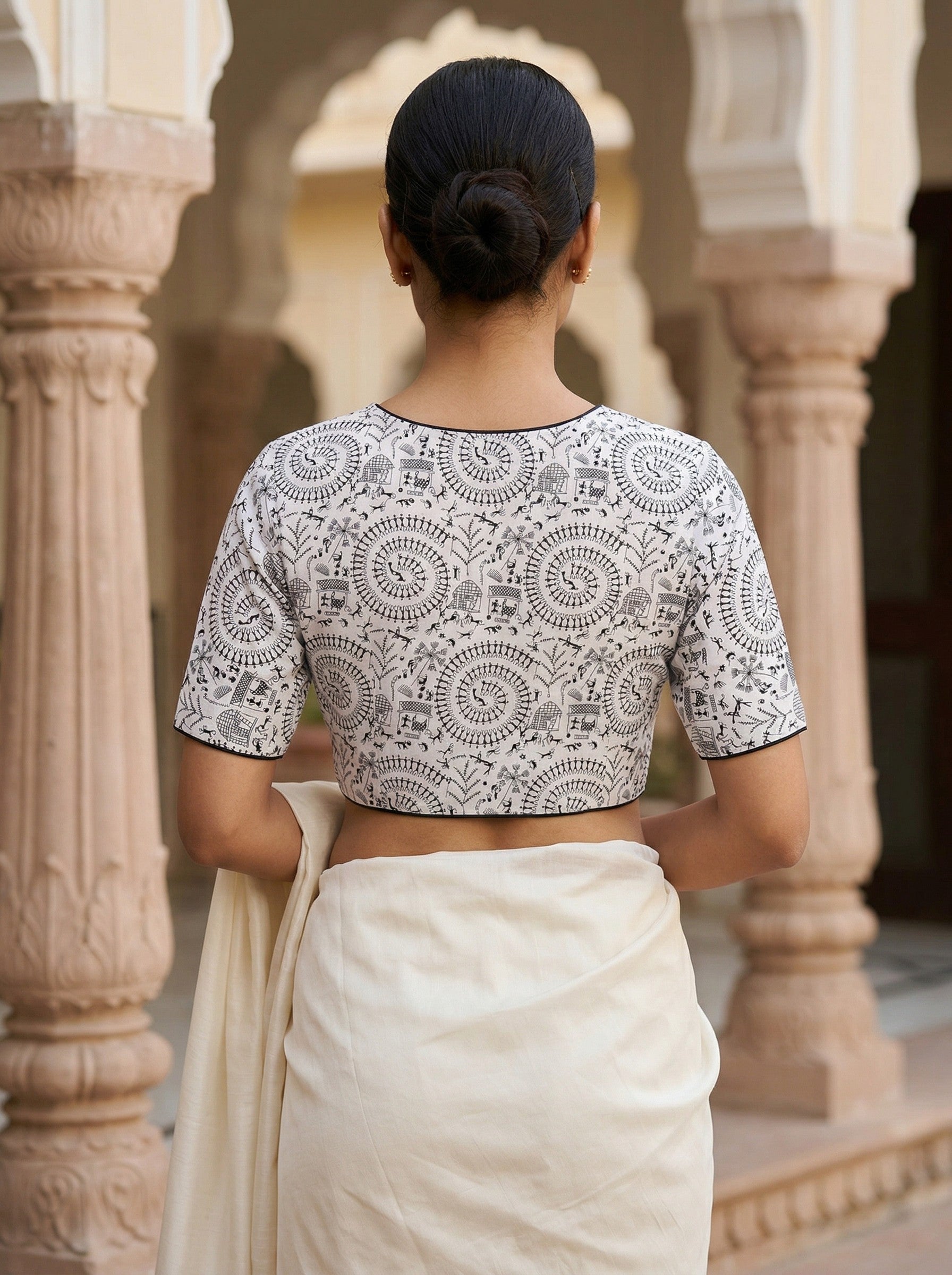
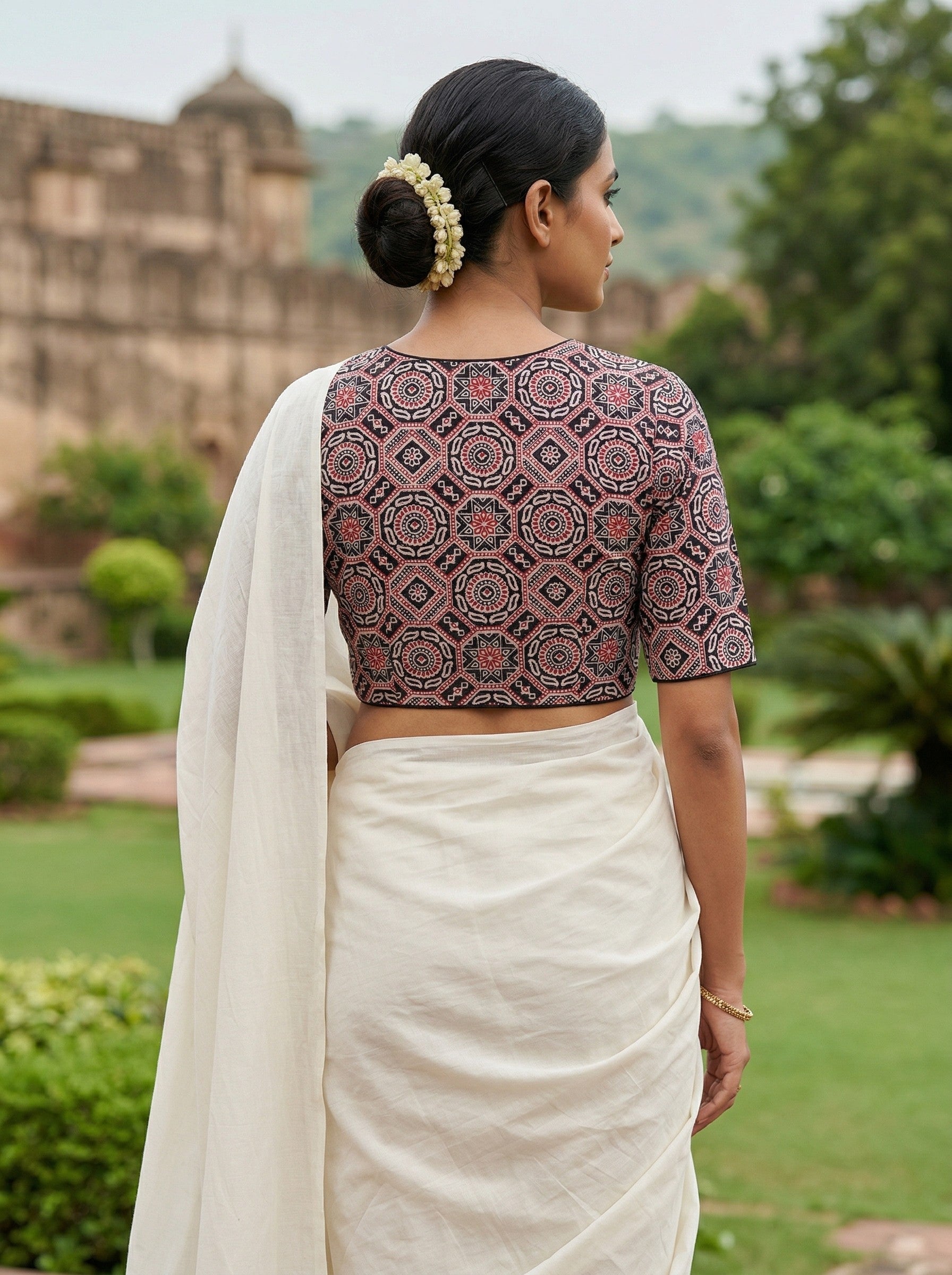
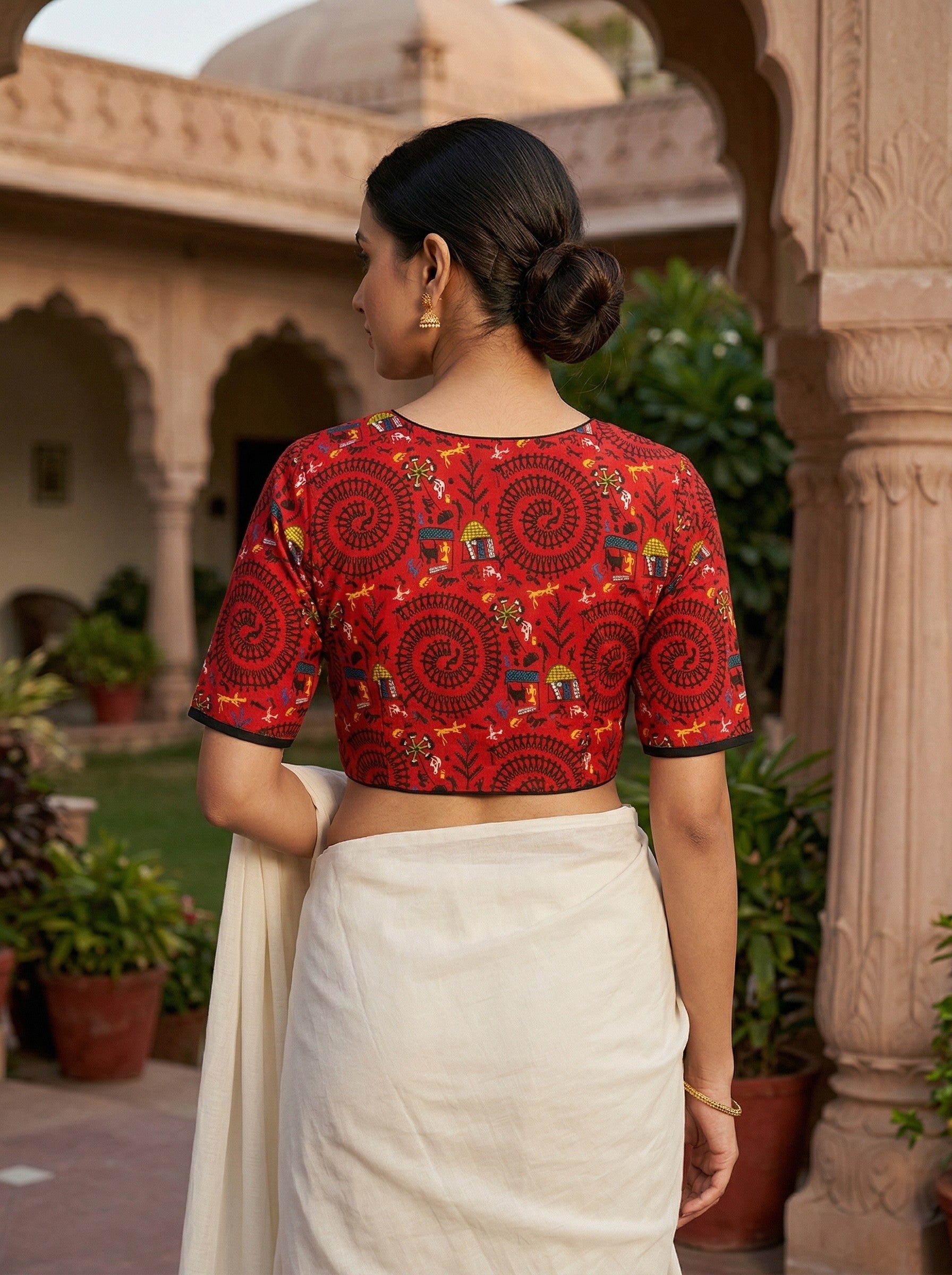
Madhubani is a folk painting tradition from the Mithila region of Bihar, done originally by women on the mud walls of their homes for weddings and festivals. The motifs are ancient. Fish for fertility. Lotus for purity. Peacocks and elephants for prosperity. When these are hand-painted onto cotton fabric and stitched into a blouse, you are essentially wearing a small piece of art on your body. Under a Pattu silk saree, the effect is quietly powerful.
The comfort argument, plainly stated
A traditional Pattu silk blouse in Chennai in May is a serious commitment. You wear it, you sit under a fan, you accept that you will be slightly damp by the end of the reception, and you drink extra water. This is what our mothers did and what most of us still do.
A cotton blouse changes this calculation. The Madhubani cotton we use is medium weight, breathable, and pre-shrunk so you do not have surprises after the first wash. In a South Indian summer function that lasts four hours, this is the difference between enjoying yourself and enduring the evening.
Colour combinations that work
Let us go by saree base colour, because that is how most women actually think about pairings.
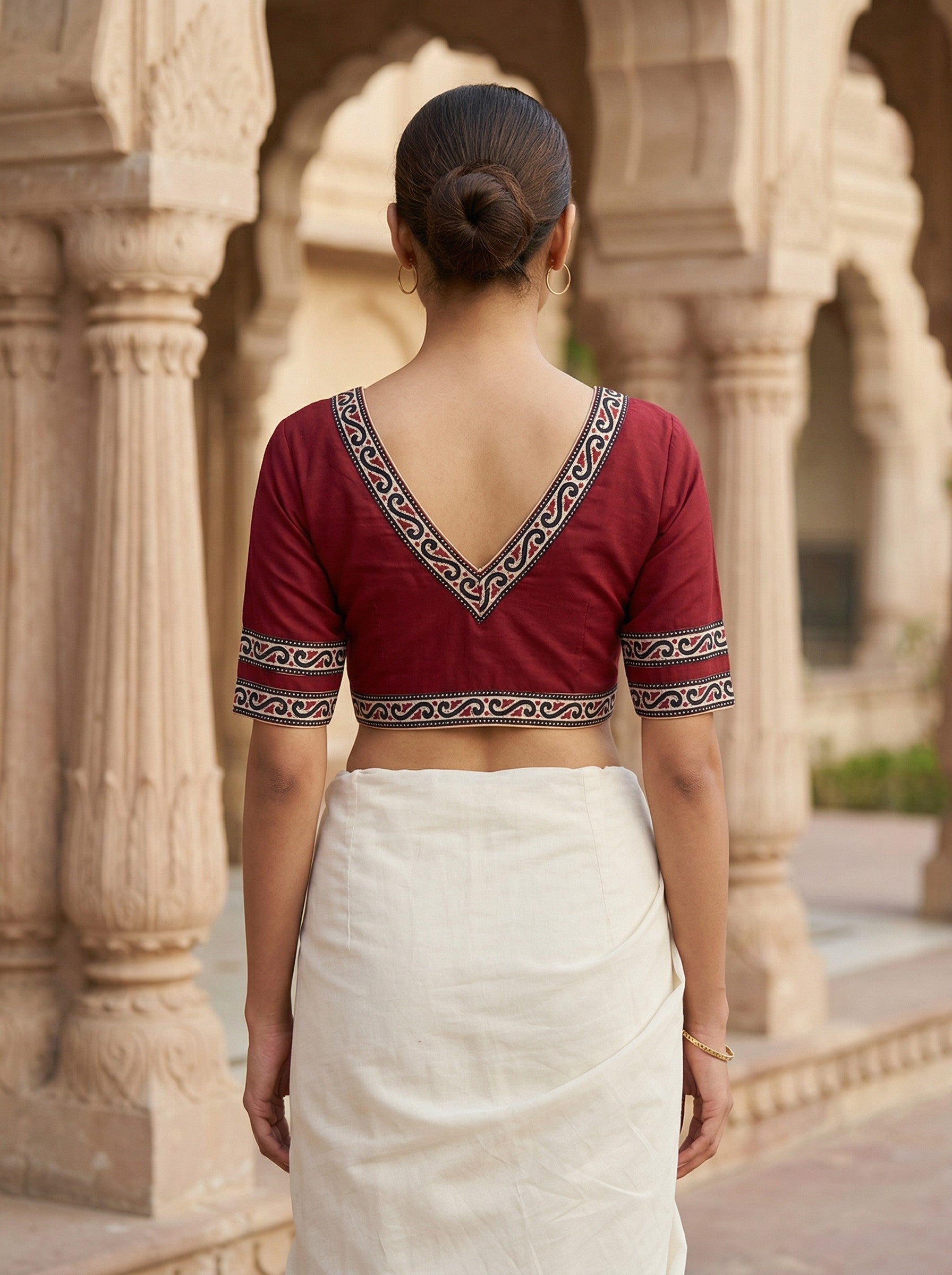
Red Pattu: An off-white or cream Madhubani blouse with black and red motifs looks beautiful. The white lightens the intensity of a red silk saree, and the red motifs on the blouse tie the whole look together. This is the pairing most South Indian brides ask us about for reception day.
Green Pattu: A mustard yellow Madhubani blouse with red and black painting is our top recommendation. The mustard warms up the cool green, and the traditional colour combination has a very grounded, ceremonial feel.
Purple or violet Pattu: A cream or beige Madhubani blouse with fine detailing. Purple is a rich colour that already brings a lot of visual weight, so the blouse should sit back and let the saree lead.
Blue Pattu: An off-white Madhubani with peacock or fish motifs is honestly hard to beat. Blue silk with white and coloured motifs has been a combination in South Indian temples for centuries, and this pairing quietly borrows from that.
Yellow or gold Pattu: A deeper base Madhubani blouse, dark red or dark green, with contrasting motifs. Yellow silk is already luminous. A dark blouse gives it something to reflect off.
Black Pattu: Cream or off-white Madhubani. Black silk with a light, story-rich blouse is stunning at evening functions. Add a temple jewellery set and you are set for any reception.
What occasions this pairing suits
We will be direct. For the actual wedding muhurtham, most South Indian families still expect a matching silk blouse. This is tradition and it deserves respect. If you are the bride, this is not the day to experiment.
For every other function, a Madhubani cotton blouse under a Pattu saree is not just acceptable, it is often the better choice. Engagement, sangeet, wedding reception, house warming, temple visits that are not tied to a specific ritual, festival lunches, family portraits. All of these welcome the pairing.
For working women who want to wear their Pattu saree occasionally to office festivals or client dinners, a Madhubani blouse makes the saree feel wearable in a way a silk blouse rarely does. You can sit through a full day of meetings without feeling like you are wearing your wedding outfit.
What makes a Madhubani blouse good or bad
Not every "Madhubani blouse" being sold online is real Madhubani. Here is what to look for.
Real Madhubani painting on fabric is done by hand with fine brushes. The lines have small variations. No two motifs are exactly identical. If you see a print where every fish is exactly the same, in exactly the same position, it is a screen print. Nothing wrong with a screen print if that is what you want, but the price should reflect it.
Hand-painted Madhubani has slight ridges where the paint sits on top of the fabric. You can feel it if you run a finger across the design.
The colours should be balanced. Traditional Madhubani uses red, black, ochre, green and sometimes indigo. If a blouse is showing you neon pink and turquoise Madhubani, it is a modern interpretation, which is fine, but call it what it is.
Cotton weight matters. Too thin and the blouse will need a lining, which defeats the purpose of buying cotton for breathability. Too thick and it becomes uncomfortable. Medium weight cotton with a slight structure is the sweet spot.
The tailoring side, which most people skip
A blouse can have the most beautiful Madhubani work in the world, but if the darts are wrong you will not want to wear it. This is why we insist on our tailoring standards.
Two front darts for shape. A properly placed back dart for structure. Sleeves that sit at the shoulder without pulling. Hook and eye closure that lies flat under the pallu. Bust measurement that is honest, not aspirational.
When you order a Madhubani blouse from us at Sayani's Creation, we measure and cut for size 30 through 44, with detailed measurements on every product page. Custom sizing is available for larger and petite frames, and we ask that you send your measurements before we cut.
Care that keeps the painting alive
Hand-painted Madhubani is more delicate than machine printing. Treat it kindly.
First wash before wearing: cold water, mild detergent, gentle hand wash. This sets the paint properly and removes any loose colour.
Regular washing: cold water only. Do not use hot water because heat can lift the paint. Do not soak the blouse for long periods. Wash and rinse within thirty minutes.
Drying: shade dry, never in direct sun. Hang from the shoulders, not from the sleeves.
Ironing: medium heat, and always iron on the reverse of the fabric. Never iron directly on the painted motifs.
Storage: fold with butter paper between the layers if the paint is heavy. Store in a cotton bag, not plastic, because plastic traps moisture.
If you follow these steps, a Madhubani blouse will look good for at least three to four years of regular wear.
Where to start
If you have never worn a cotton contrast blouse under a Pattu silk saree before, we would suggest starting simple. A cream or off-white Madhubani blouse works with almost any silk saree colour, and it is a safe first purchase.
You can browse our current Madhubani blouse collection online. Each product page includes real photographs of the blouse both flat and worn, honest colour information, size measurements, and delivery time estimates for major South Indian cities. Cash on delivery is available across Tamil Nadu, Karnataka, Andhra Pradesh, Telangana and Kerala.
Featured Product in this Article
 View
View
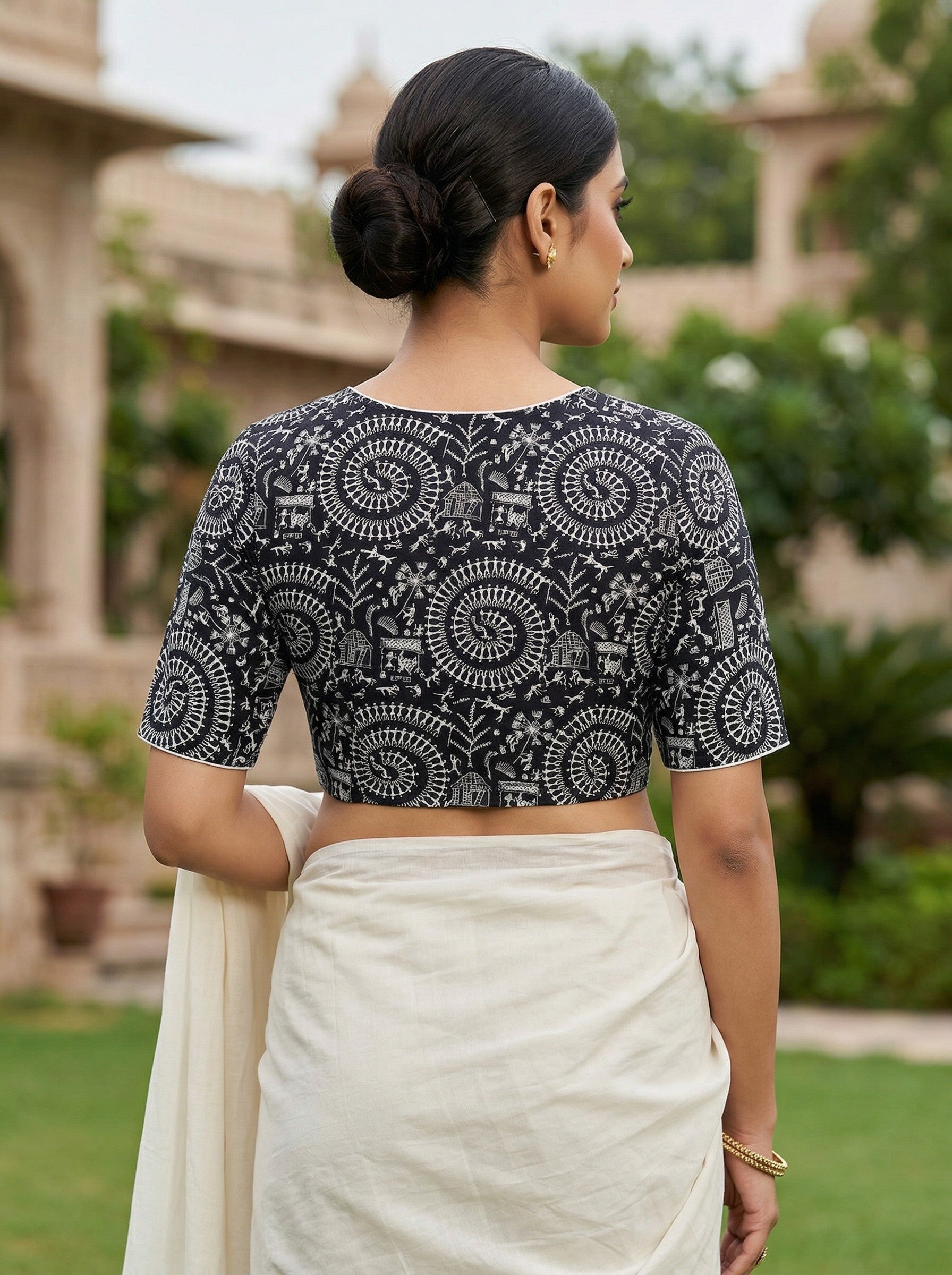
Black Cotton Saree Blouse Readymade with Madhubani Print (Size 30–42)
Frequently asked questions
Is hand-painted Madhubani really worth the extra cost?
If you plan to wear the blouse for years and value the craftsmanship, yes. If you want the aesthetic at a lower price point, a good quality Madhubani print blouse is a reasonable choice. Both have a place.
Will the paint come off after washing?
Not if the blouse is made properly. Real hand-painted Madhubani on cotton uses fabric-safe pigments that are fixed with a specific process. Some very slight softening of colour is normal over years of washing, but the design remains intact.
Can I wear a Madhubani blouse to a South Indian wedding?
Yes, for receptions and non-ceremonial functions. Not usually recommended for the muhurtham itself unless the family has explicitly said contrast blouses are welcome.
What is the difference between Madhubani and Kalamkari?
Both are traditional Indian painting traditions on fabric. Madhubani comes from Bihar, uses a specific set of folk motifs, and has a very distinct visual style. Kalamkari comes from Andhra Pradesh and Telangana, and often depicts scenes from Hindu mythology in a more detailed narrative style. Both look beautiful on cotton blouses, but the feel is different.
How long does delivery take to Chennai or Bangalore?
Four to five working days for most orders. During heavy sale periods or festival season, please add one or two extra days.