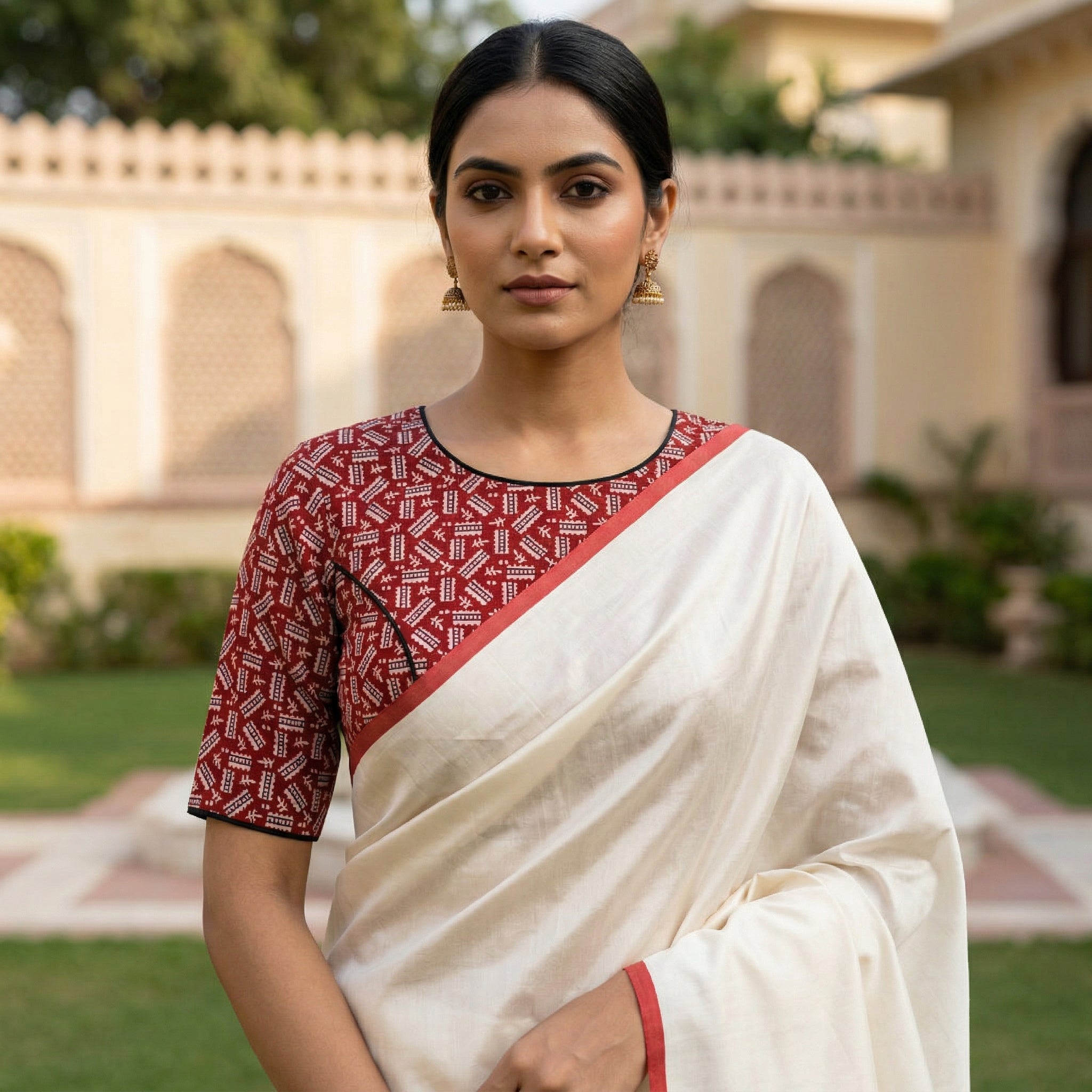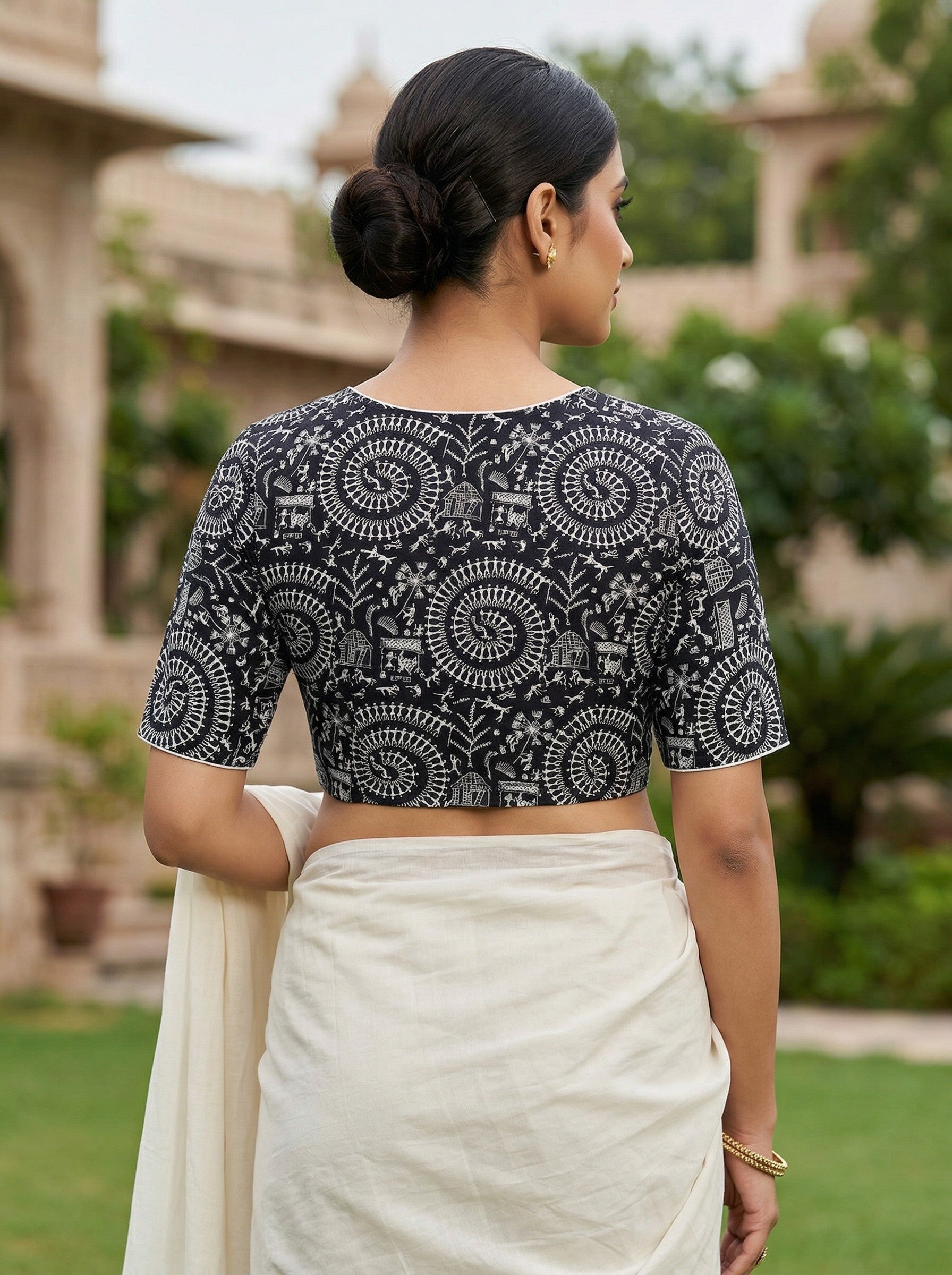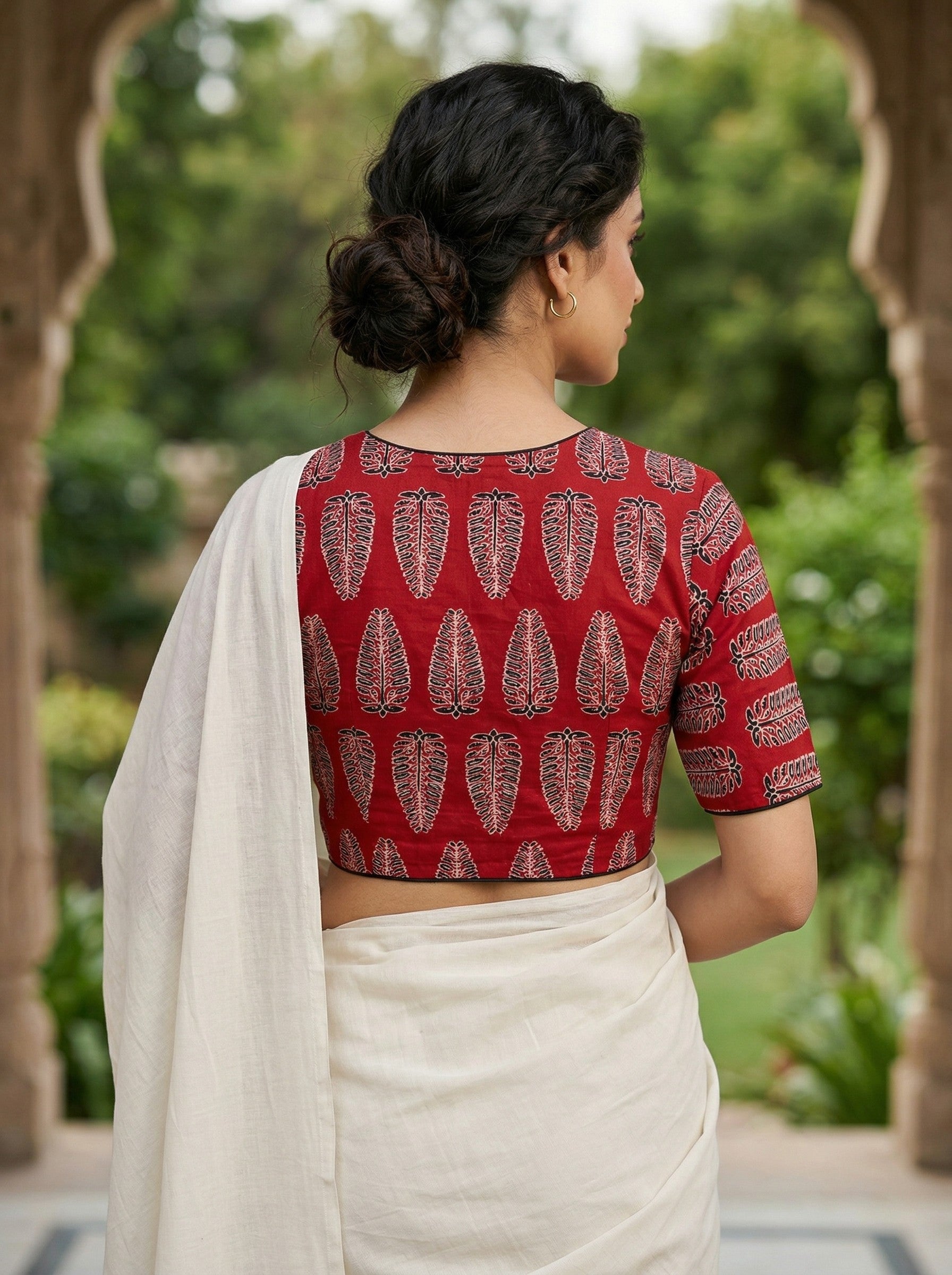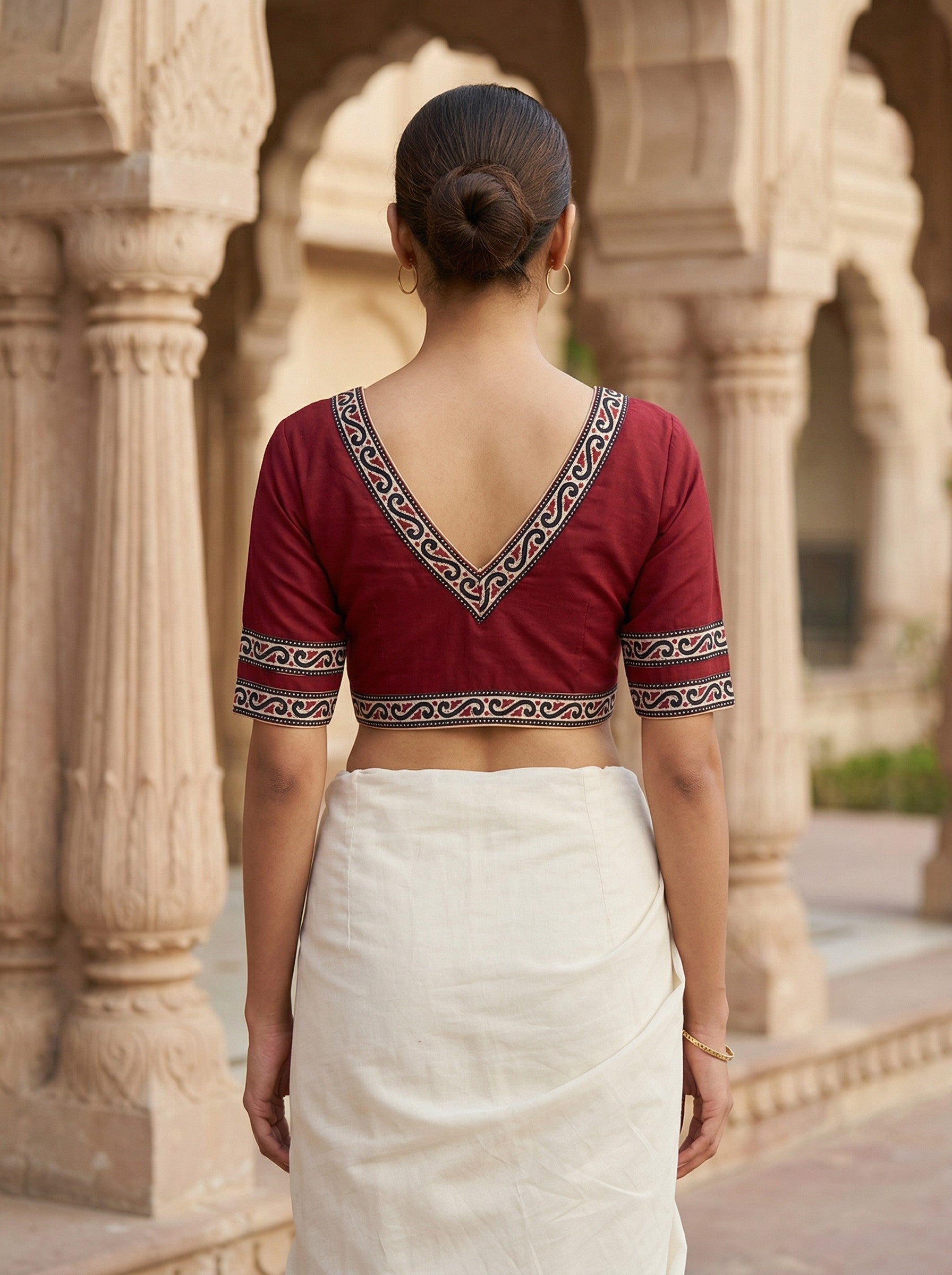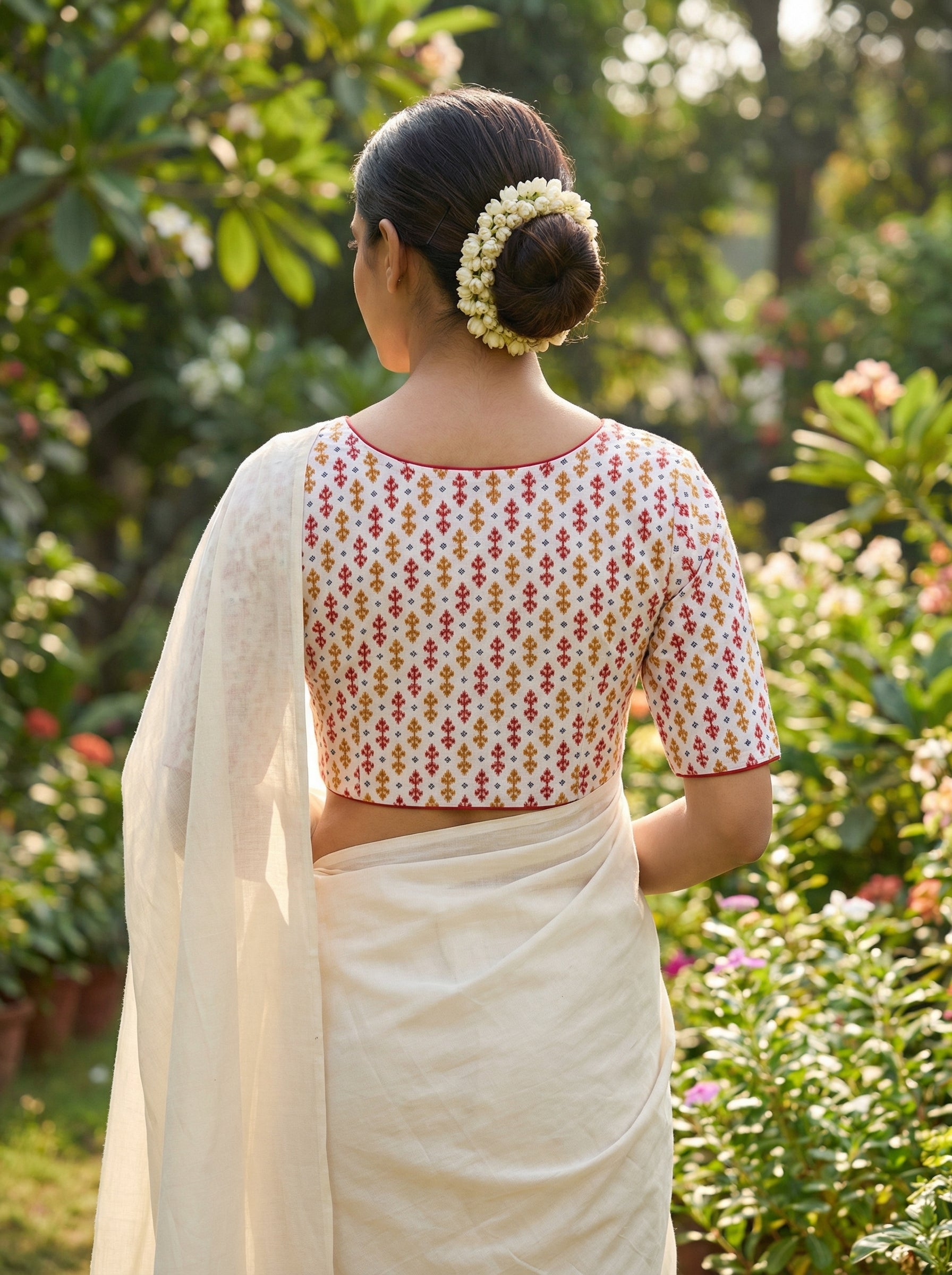
Walk into any decent Indian textile store and you will find pieces labelled Kalamkari, Ajrakh, and Madhubani. Most customers pick based on what looks appealing, without really knowing what makes each of these three traditions different. They are all Indian. They all use natural elements. They all end up on beautiful cotton blouses. So what is the actual difference?
Quite a lot, as it turns out. Each of these is a distinct craft tradition from a specific part of India, with its own history, technique, colour palette, and visual grammar. Understanding the differences will help you buy better, wear better, and pair better with your saree collection.
Let us walk through them.
Kalamkari: the storyteller of the south
Kalamkari comes from Andhra Pradesh and Telangana, specifically from two towns, Sri Kalahasti and Machilipatnam. The name means "kalam kari", or "pen work", because the traditional technique uses a bamboo pen with a felt tip to draw the design directly on the fabric.
Kalamkari has two distinct sub-styles.
Sri Kalahasti Kalamkari is fully hand painted. Artists draw scenes from Hindu mythology, the Ramayana, the Mahabharata, and various Puranas, using a bamboo pen and natural dyes. The compositions are narrative, dense with figures and detail, and can take weeks to complete a single saree.
Machilipatnam Kalamkari uses hand block printing combined with hand painting. The outlines are printed with wooden blocks, and the colours are filled in by hand. This makes it more affordable and slightly less intricate than Sri Kalahasti work.
The colour palette of Kalamkari is earthy. Rust red from madder root, black from fermented iron, mustard from myrobalan, indigo blue. The whole aesthetic is warm, ancient, and tied to temple traditions.
Kalamkari cotton blouses tend to be visually rich. If you buy a Kalamkari blouse, you are buying a piece with a story woven into it. It works best with plain or minimally patterned silk sarees where the blouse can be the focal point.
Ajrakh: geometry from the desert
Ajrakh comes from Kutch in Gujarat, done by the Khatri family community. The tradition is one of the oldest continuous block printing traditions in the world, with roots going back to the Indus Valley civilization.
The technique is complex. Ajrakh uses a multi-stage process of block printing with resist paste, mordant, and natural dyes. A single piece goes through fourteen to sixteen separate stages of printing, dyeing, and washing over about fifteen to twenty days.
The colour palette is very specific. Indigo blue from the indigofera plant. Madder red from madder root. Iron black from rusted metal and jaggery fermentation. Occasional yellow from pomegranate rind or turmeric.
The motifs are always geometric. Stars, jaali patterns, medallions, scallops, repeating grid designs. There is no figurative or floral element in traditional Ajrakh. Everything is mathematical and pattern-based.
Ajrakh cotton blouses have a calm, sophisticated look. The geometric patterns give the eye structure without being visually loud. This makes Ajrakh an excellent choice for pairing with heavily patterned or multicoloured silk sarees, where you want the blouse to provide visual anchor.
Madhubani: the folk art of Mithila
Madhubani, also called Mithila art, comes from northern Bihar. Unlike Kalamkari and Ajrakh, which are done in workshop settings mostly by men, Madhubani is traditionally a domestic art done by women.
The origin is ritual. Madhubani paintings were originally created on freshly plastered mud walls of houses for weddings, births, and religious festivals. Women passed the tradition down through generations, painting the same motifs their mothers and grandmothers had painted.
The technique for cotton is hand painting with fabric-safe pigments. Some pieces are also block printed with hand-painted colour fill, similar to Machilipatnam Kalamkari technique.
The colour palette is bright and joyful. Red, yellow, black, green, and blue, often used in bold combinations.
The motifs are folk-symbolic. Fish for fertility. Lotus for purity. Peacock for beauty and love. Elephant for prosperity. Sun and moon for cosmic order. Krishna and Radha for divine love. Wedding scenes with detailed narrative panels.
Madhubani cotton blouses have a distinct visual energy. They are art you wear. Best paired with plain silk sarees where the blouse can be the main feature.
How the three compare, side by side
Origin: Kalamkari from Andhra Pradesh. Ajrakh from Gujarat. Madhubani from Bihar.
Traditional practitioners: Kalamkari mostly by male artisans in workshop settings. Ajrakh by the Khatri family community, both men and women, in workshops. Madhubani traditionally by women in domestic settings, though now practised in workshops too.
Technique: Kalamkari is pen-drawn and hand-painted, sometimes with block-printed outlines. Ajrakh is block-printed with multi-stage natural dyeing. Madhubani is hand-painted, sometimes with block-printed outlines.
Colour palette: Kalamkari is rust, black, mustard, indigo. Ajrakh is indigo, madder red, black, occasional yellow. Madhubani is bright red, yellow, black, green, blue.
Motifs: Kalamkari is mythological and figurative. Ajrakh is purely geometric. Madhubani is folk-symbolic with fish, lotus, peacock, elephant, and narrative wedding scenes.
Visual weight: Kalamkari is dense and narrative. Ajrakh is calm and structured. Madhubani is bright and story-rich.
Best for pairing with: Kalamkari pairs with plain or minimally patterned silks. Ajrakh pairs with heavily patterned or multicoloured silks. Madhubani pairs with plain silks where the blouse leads.
Which one to choose
If you are building a blouse collection for silk sarees and can only pick one to start, here is how we would suggest choosing.
If you are drawn to storytelling, mythology, and warm earthy colours, Kalamkari is your entry point. Look for Machilipatnam-style Kalamkari for a good balance of authenticity and affordability.
If you like clean geometric design, cool sophisticated colours, and versatile pairing, Ajrakh is the strongest choice. An indigo Ajrakh blouse with rust detailing can pair with more sarees in your wardrobe than almost any other blouse.
If you love bright, joyful, artistic pieces and enjoy the folk-art energy, Madhubani is where you should start. A cream Madhubani blouse with traditional motifs works with a wide range of silks.
Many women eventually own one of each, and that combination covers most of what your saree collection needs.
Price ranges to expect
Prices vary widely by quality and source, but general ranges for cotton blouse pieces are:
Sri Kalahasti Kalamkari (fully hand painted): Two thousand to five thousand rupees for a blouse piece.
Machilipatnam Kalamkari (block printed with hand painting): Eight hundred to two thousand rupees.
Ajrakh from Kutch (natural dye, hand printed): One thousand to twenty-five hundred rupees.
Hand painted Madhubani: One thousand to three thousand rupees.
Screen printed versions of any of these: Three hundred to eight hundred rupees.
Stitched blouses add another five hundred to fifteen hundred rupees for tailoring depending on complexity.
Care differences
The three traditions have slightly different care needs.
Kalamkari (especially natural dye pieces) needs cold water hand wash for the first several washes. Colours may release initially but stabilise. Shade dry always.
Ajrakh is the most resilient once properly set, because the natural dyes are stabilised through the multi-stage process. Cold water hand wash for the first three washes, then gentle machine wash on cool is fine.
Madhubani hand painting is the most delicate. Cold water hand wash always, never soak, always shade dry, iron only on the reverse and never on the painted motifs.
What we offer at Sayani's Creation
Our current range includes hand block printed Ajrakh cotton blouses from Kutch, hand painted Madhubani cotton blouses done by artists from Bihar, and select Kalamkari blouse pieces from Machilipatnam.
All are stitched in our Shantiniketan workshop, sizes 30 to 44, with detailed measurements on every product page.
Delivery across India in four to five working days for most cities, cash on delivery available across most states.
Featured Product in this Article
 View
View
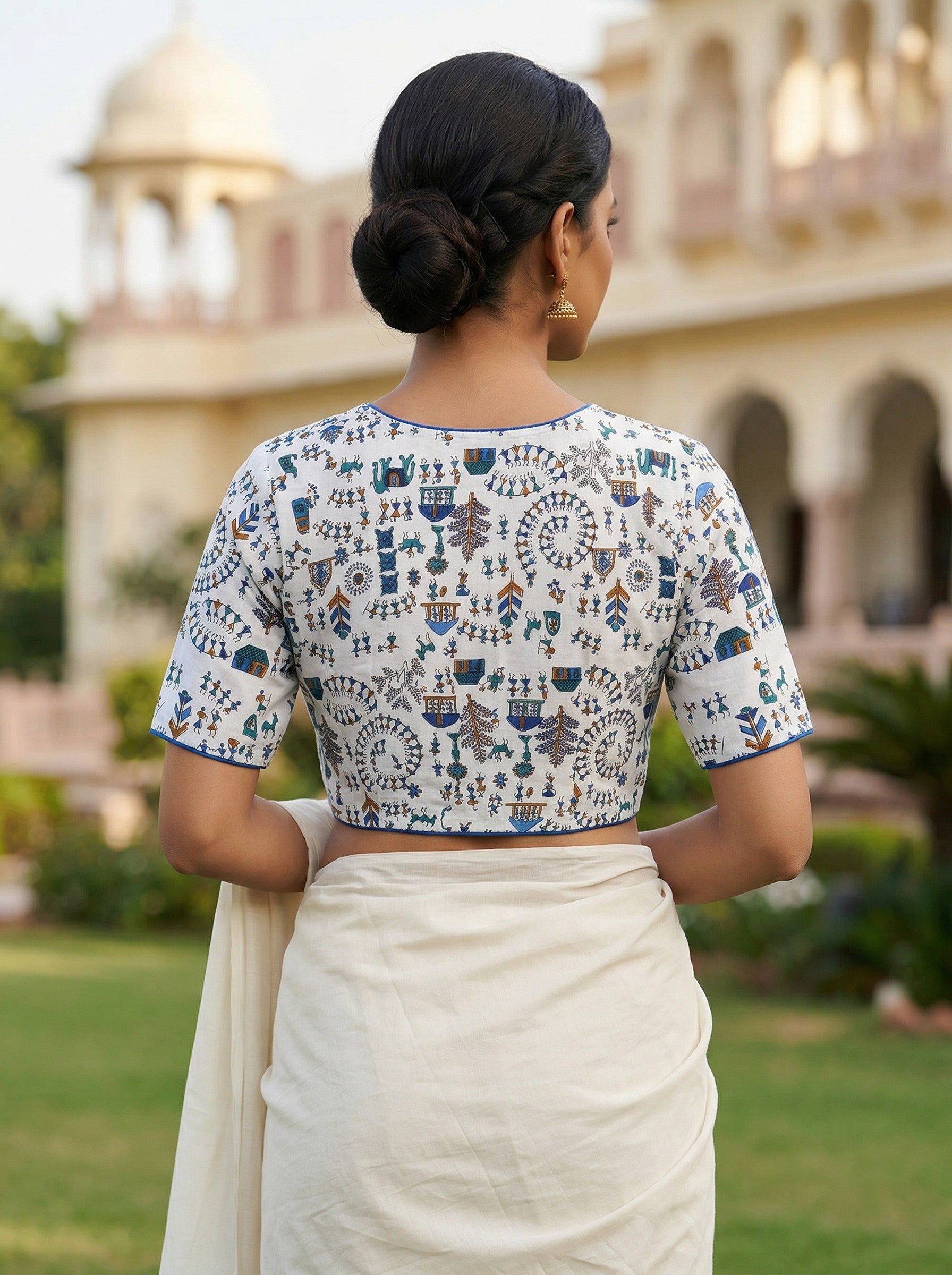
White & Blue Madhubani Hand Printed Cotton Saree Blouse (Size 30–42)
Frequently asked questions
Which of the three prints lasts the longest?
Ajrakh, generally. The multi-stage natural dye process makes the colours more stable. Kalamkari and Madhubani need slightly more careful washing to maintain colour, but all three can last four to six years with proper care.
Can I mix and match, like an Ajrakh blouse with a Kalamkari saree?
Yes, absolutely, and it can look beautiful. Just make sure the colour palettes complement each other. Indigo Ajrakh with rust Kalamkari saree is a stunning combination.
Are these all natural dye?
Traditionally yes. Modern commercial versions of all three are sometimes made with chemical dyes for cost reasons. Ask the seller specifically if natural dye matters to you.
Which is best for a first-time buyer?
Ajrakh from Kutch. The versatility, the price range, the durability, and the ease of pairing make it the strongest entry point into traditional Indian textile art.
Do you take custom orders?
Yes, for Madhubani especially, we can arrange custom hand-painted blouses with specific motifs for weddings or special occasions. Custom orders take fifteen to twenty working days.