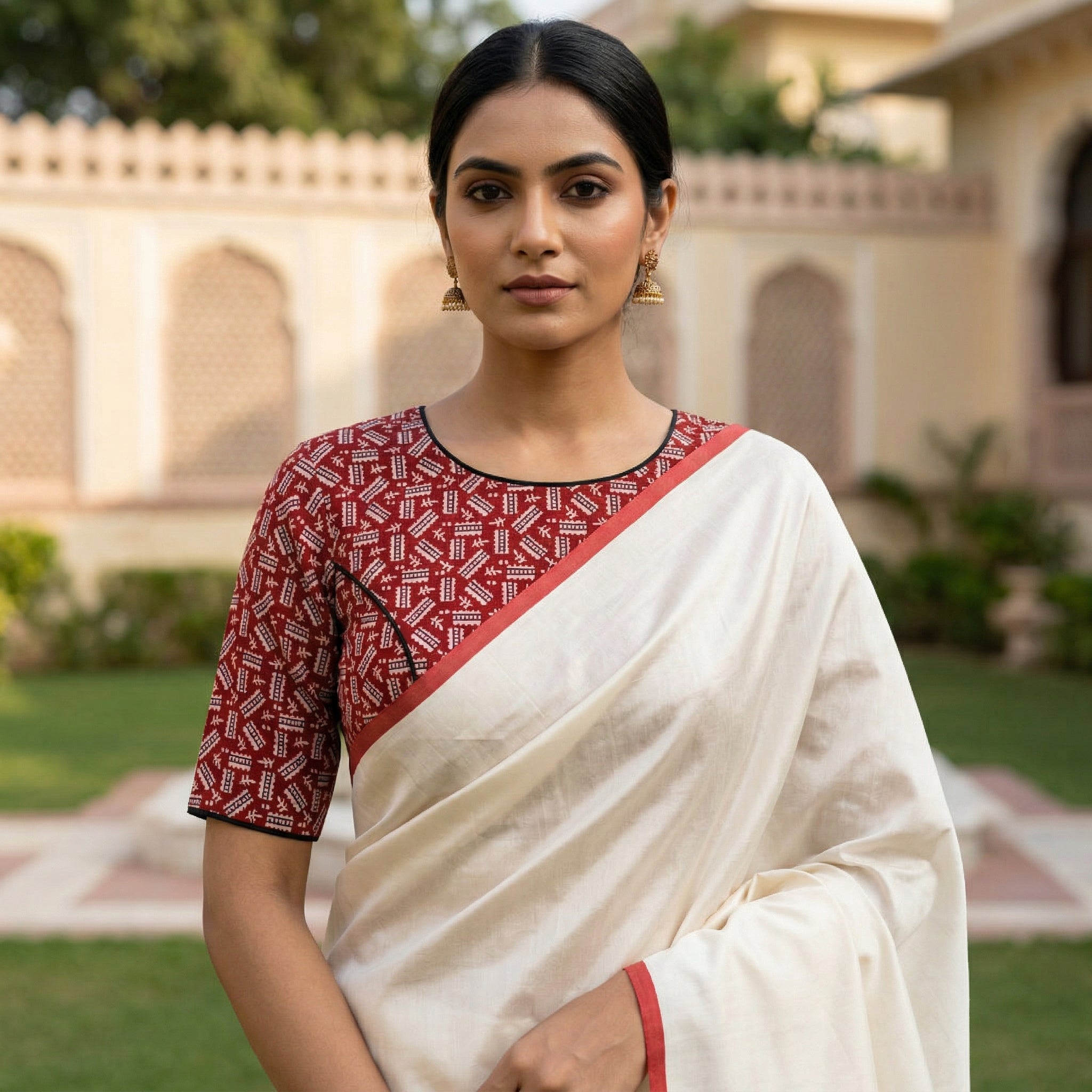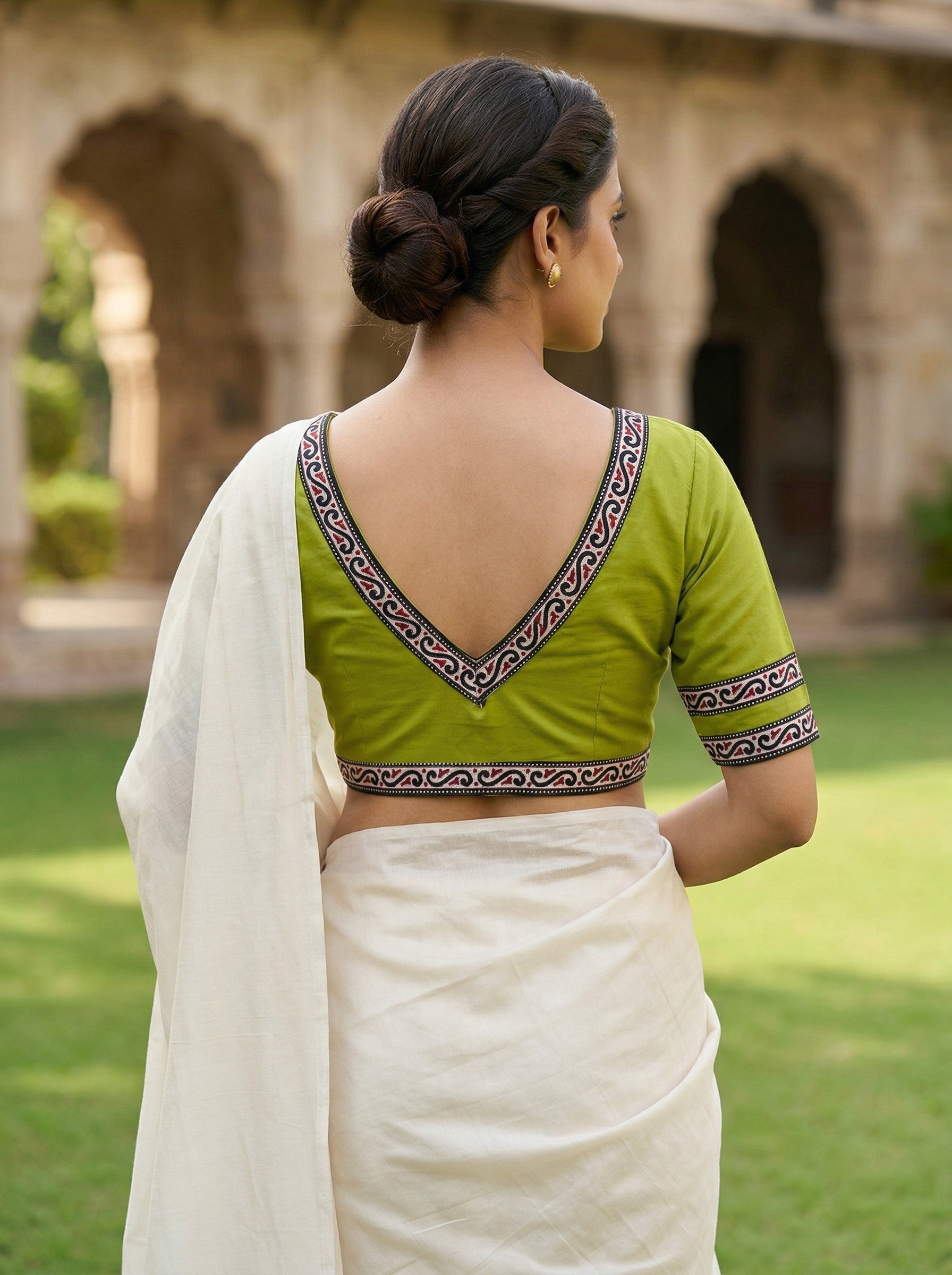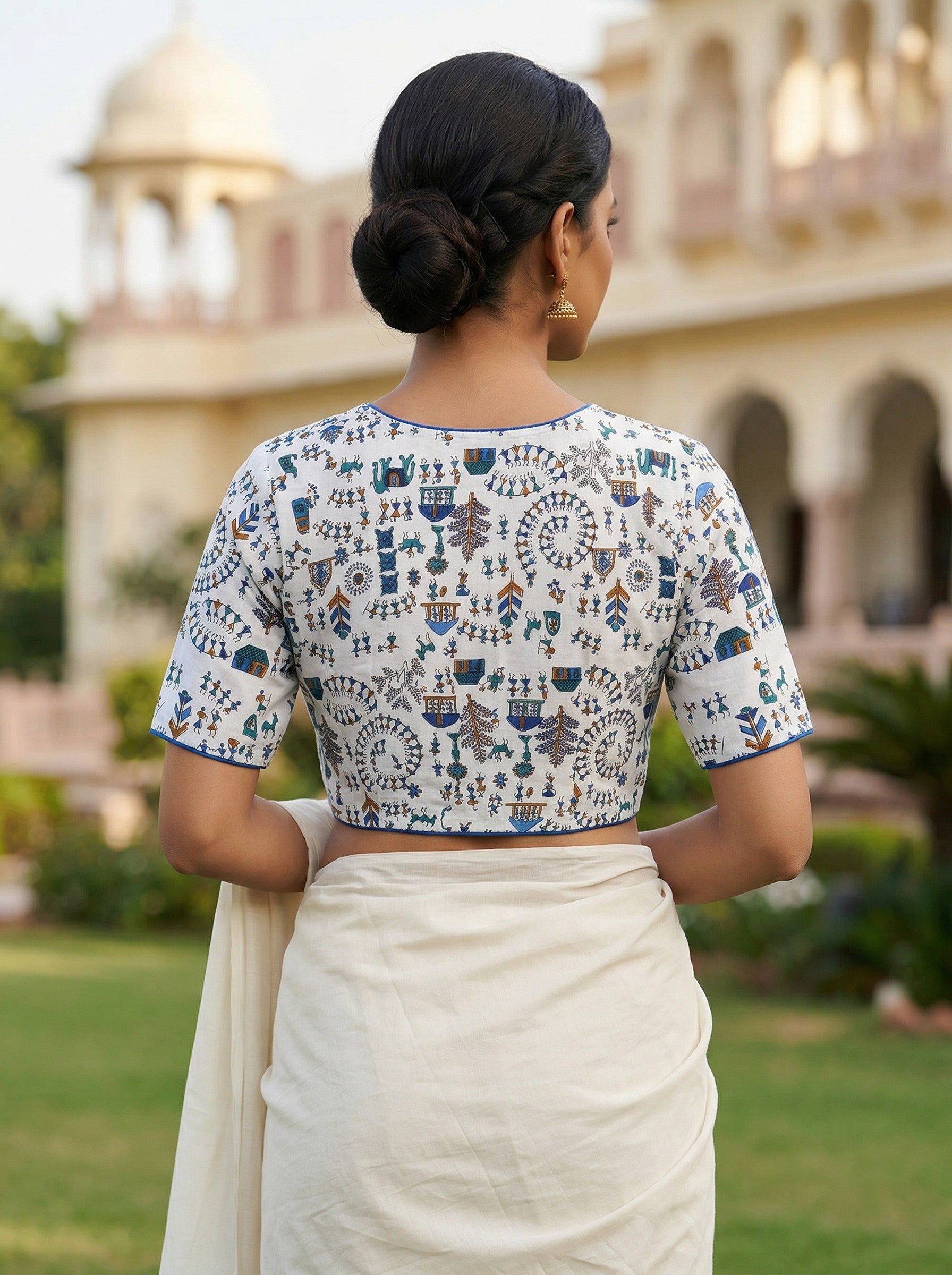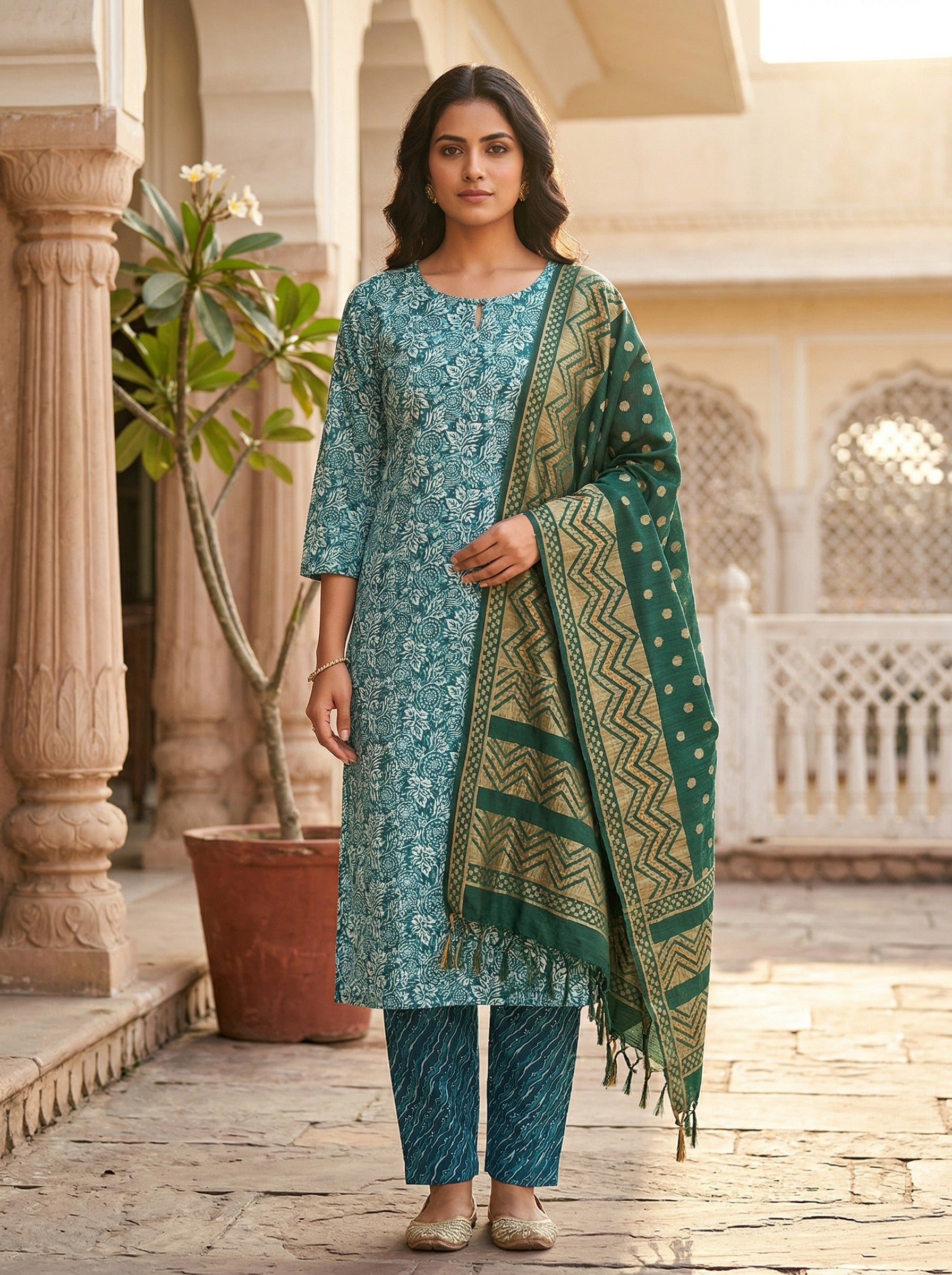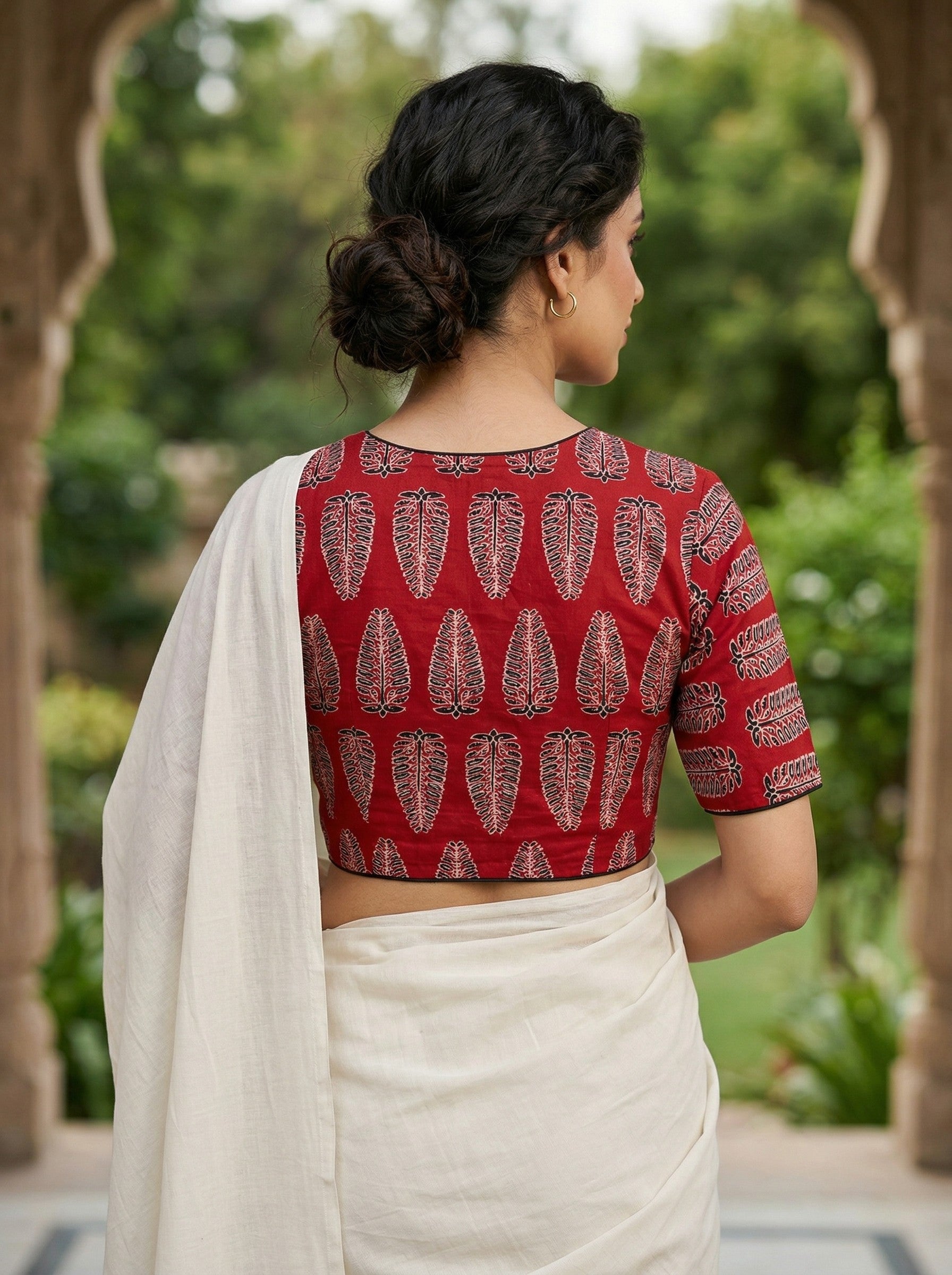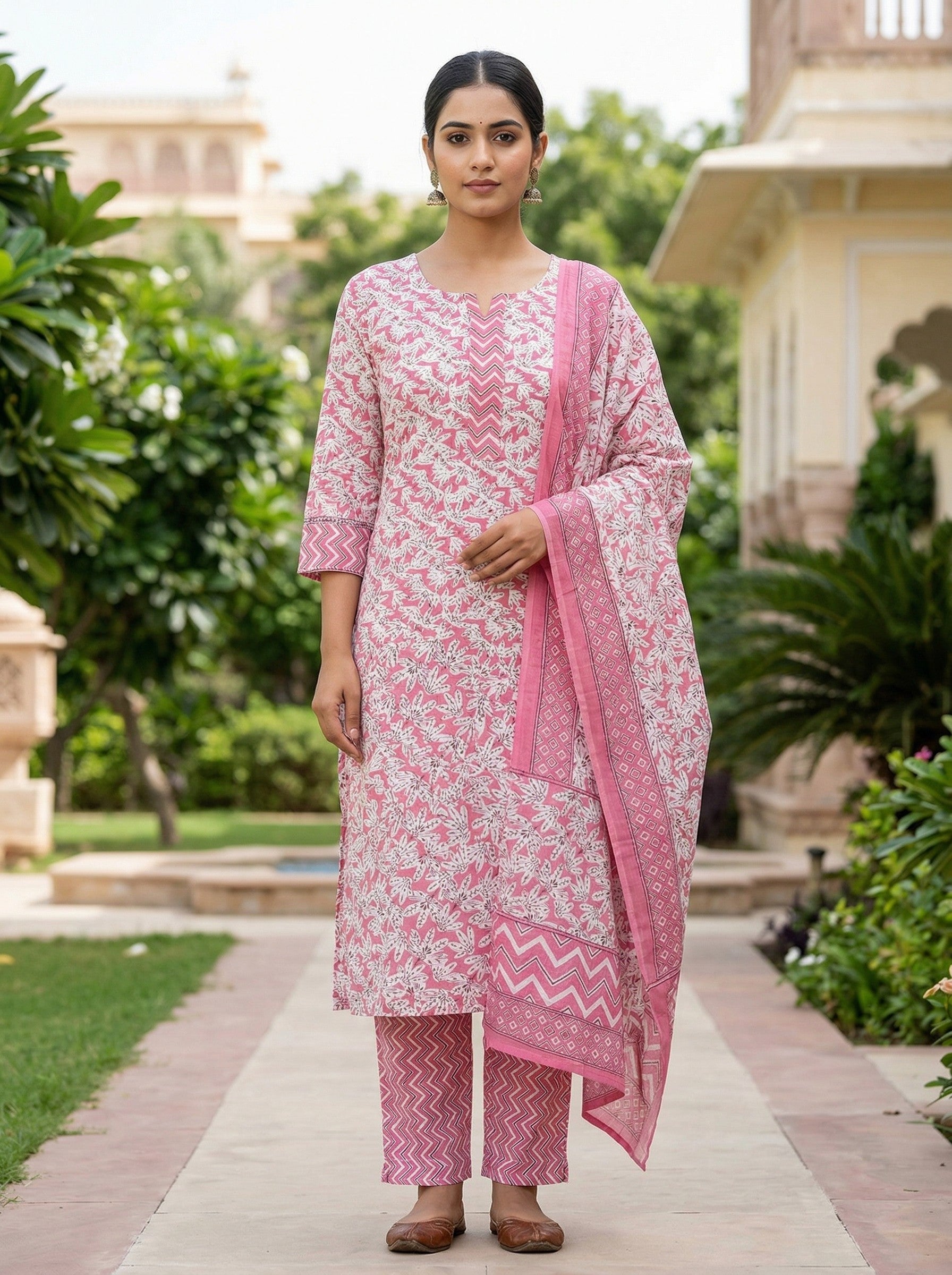
There is a peculiar thing about hand block printing. Everyone thinks they know what it is, most people have owned a block print piece at some point, and yet almost nobody can describe what actually happens in a block printing workshop. The words "hand block print" have been used so often on cheap machine-made kurtas that the real craft has become invisible.
Let us fix that.
If you are buying a cotton blouse and the seller says it is hand block printed, you should know what that means, how it is made, and how to check whether the claim is true. This guide walks you through the whole process the way it actually happens in workshops across Rajasthan, Gujarat and West Bengal.
What hand block printing means, precisely
Hand block printing is a technique for putting a repeated pattern on fabric using wooden blocks that have the design carved into their surface. The printer dips the block into dye or applies dye to the block, then stamps it onto the fabric by hand. The pattern is built up stamp by stamp across the length of the cloth.
Every stamp is placed by a human eye and a human hand. This is what makes it "hand" block printing. If a machine places the block, or the block is a photographic reproduction rather than carved wood, or the dye is applied by roller rather than by stamp, it is not hand block printing regardless of what the label says.
Where hand block printing is done in India
The main centres of hand block printing in India today are:
Rajasthan: Bagru, Sanganer, Jaipur, and Balotra. Famous for Bagru and Sanganeri prints, mostly floral, in red and black on cream base with occasional indigo.
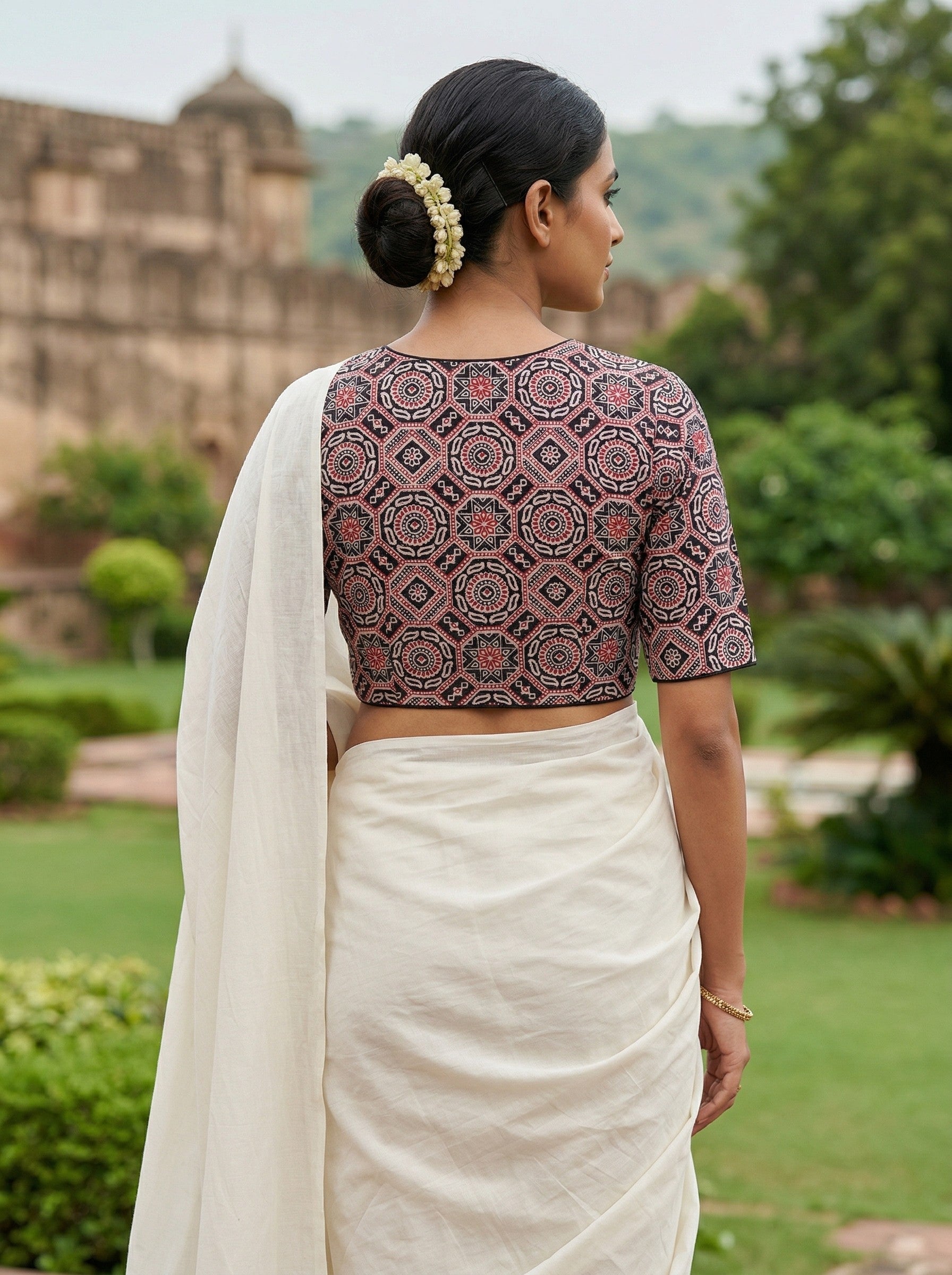
Gujarat: Kutch region, particularly Ajrakhpur and Dhamadka villages. Famous for Ajrakh, geometric, natural dye, indigo and rust.
Madhya Pradesh: Bagh village. Famous for Bagh prints, geometric, natural dye, often on kora cotton.
Andhra Pradesh: Machilipatnam. Famous for Kalamkari, though Kalamkari is technically hand painted, not printed. Some Kalamkari-style block prints do exist.
West Bengal: Serampore and Shantiniketan. Smaller centres, produce floral and geometric block prints in local styles.
Each region has its own specific colour palette, motif vocabulary, and process. When someone says a piece is "block printed", it helps to know which tradition it belongs to, because that tells you a lot about what to expect.
The block itself
Everything starts with the block. Blocks are carved from seasoned teak or sheesham wood. A single block is usually four to six inches on a side, sometimes larger for border prints.
The design is drawn on paper first, then transferred to the wood. A skilled block carver uses small chisels and knives to remove the wood around the design, leaving the design raised in relief. The parts that will print are the raised parts.
A good block takes a skilled carver two to four days to finish, depending on the intricacy of the design. Blocks are made in matched sets, with separate blocks for each colour in the design and separate blocks for outline and fill.
Good workshops treasure their blocks. Some workshops have blocks that are eighty to a hundred years old, still in use, passed down through generations. When you see an old block being lifted out and used, it feels like something living.
Preparing the fabric
Cotton fabric cannot just come off the loom and go straight to printing. It needs preparation.
First, the cloth is washed to remove any starch, oil, or sizing chemicals used during weaving. This is often done in flowing water, sometimes with a mild alkali.
Then the cloth is beaten with wooden mallets to soften it and open the fibres. This helps the dye penetrate later.
Then the cloth is treated with a mordant. Different regions use different mordants depending on their tradition. Alum, iron sulphate, and myrobalan are common. The mordant is what makes the dye bond permanently to the cotton fibres. Without it, colours would wash out in the first cleaning.
Finally, the cloth is dried and stretched flat on the printing table, held in place with clips or tape.
The printing itself
The printer sits or stands at a long padded table with the cloth stretched across it. Beside them is a tray of dye and a stack of blocks.
The process for each stamp is:
Dip the block into the dye tray until the raised design is coated evenly. Not too much dye, or it will smudge. Not too little, or the print will be patchy.
Position the block on the cloth. This is where skill shows. The printer has to align each stamp so it matches perfectly with the surrounding pattern. Registration errors are the difference between a beautiful piece and a rejected one.
Press down firmly with the palm of the hand. The pressure is important. Too light, and the print will be faint. Too heavy, and it will smudge.
Lift the block cleanly. Move to the next position. Repeat.
A skilled printer can do this for eight hours a day, placing stamps at a rhythm that looks almost meditative. A single blouse piece might take between four and six hours of continuous printing.
Adding second and third colours
Most block prints use more than one colour. Multi-colour printing is done in stages.
The first colour is printed across the whole fabric. Then the fabric is dried, usually in the sun on a rooftop or courtyard.
The second colour is then printed on top of the first, using a different block that fits into the design where the second colour should appear. This requires very precise registration, because if the second block is slightly off, the whole pattern becomes visually messy.
Ajrakh uses this approach with up to five or six separate colour stages, plus resist and dyeing stages between them. This is why a single Ajrakh piece takes fifteen to twenty days to complete.
Simpler two-colour block prints from Bagru or Sanganer might take three or four days for a saree length.
Setting and washing
After all printing is done, the fabric is dried and then washed to remove excess dye and any resist paste. This washing is done in cold water, sometimes multiple times, sometimes in flowing river water for natural dye pieces.
The fabric is then dried again, ironed flat, and folded for finishing.
Some pieces then go through additional stages like starching or calendaring to get a specific finish. Most cotton blouse pieces skip these steps and are shipped directly for tailoring.
Why hand block prints cost what they cost
If you understand the process, the price makes sense.
A block set: five thousand to twenty thousand rupees, used across many pieces.
Fabric preparation: half a day of labour per piece.
Printing: four to twenty days of labour depending on complexity.
Dyeing: separate labour, especially for natural dye pieces.
Washing and finishing: additional half day.
For a single hand block printed cotton blouse piece, the labour cost alone can be five hundred to fifteen hundred rupees. Add the material, workshop overhead, transportation, and margin, and you can see why a real hand block print blouse cannot be sold for two hundred rupees.
If a piece is being sold for less than five hundred rupees and claims to be hand block printed, it is almost certainly screen printed. Screen printing is a valid technique, but it should be priced and labelled honestly.
How to check if your blouse is really hand block printed
Look for small irregularities. Hand block printing has slight variations in pressure, slight registration differences, occasional small gaps or overlaps. Screen printing has perfect uniformity.
Look at the reverse of the fabric. Hand block prints often show slight dye penetration on the reverse. Screen prints usually sit only on the surface.
Feel the fabric. Hand block prints have very slight texture where the dye is more concentrated. Screen prints often feel completely flat.
Ask about the printer. Sellers who work with real block printers can name the workshop, the region, the printer or family. If a seller cannot answer these questions, be sceptical.
What we work with
At Sayani's Creation, we source our block printed cotton from Kutch (for Ajrakh) and Rajasthan (for Bagru and Sanganer style prints). We work directly with printer families and can trace each fabric to its workshop.
We tailor the blouses in our own Shantiniketan workshop in West Bengal, which lets us maintain quality control on cutting, fitting, and finishing.
Our block printed cotton blouses are available in sizes 30 to 44, with detailed measurements on every product page. Delivery to major Indian cities is four to five working days, with cash on delivery available across most states.
Care instructions
Hand block prints, especially with natural dyes, need gentle care.
Cold water hand wash for the first three washes with mild detergent. Do not soak.
Shade dry only. Never in direct sun, especially for indigo pieces.
Iron on medium heat on the reverse of the fabric.
For pieces with heavy print or dense design, wash separately from other clothes for the first few washes.
Do not dry clean unless the piece has embellishments that require it.
Handled properly, a hand block print cotton blouse will look good for four to six years of regular wear.
Featured Product in this Article
 View
View
Black Ajrakh Print Cotton Saree Blouse – Half Sleeve (Size 30–42)
Frequently asked questions
How long does it take to hand block print one blouse piece?
A simple two-colour block print takes about a day of active printing plus drying time. A complex Ajrakh piece takes fifteen to twenty days including all the natural dye stages.
Are all block prints from Rajasthan?
No. Rajasthan is one of several important centres. Gujarat, Madhya Pradesh, and West Bengal also have their own block printing traditions, each with different colour palettes and motifs.
Can I trust "hand block printed" labels?
Not automatically. Ask specific questions about the workshop, the region, and the process. Real block print sellers will answer easily. Vague or evasive answers usually mean the piece is not what the label claims.
Will the print fade over time?
Natural dye prints soften slightly over years of washing but do not fade dramatically if care instructions are followed. Chemical dye prints hold colour longer but often look less soft and lived-in.
Is machine block printing a real thing?
There is roller printing which uses engraved metal rollers and is fully mechanised. There is screen printing which uses a stencil-and-squeegee process. Both are called "block print" in some marketing but neither involves actual hand-stamped wooden blocks.