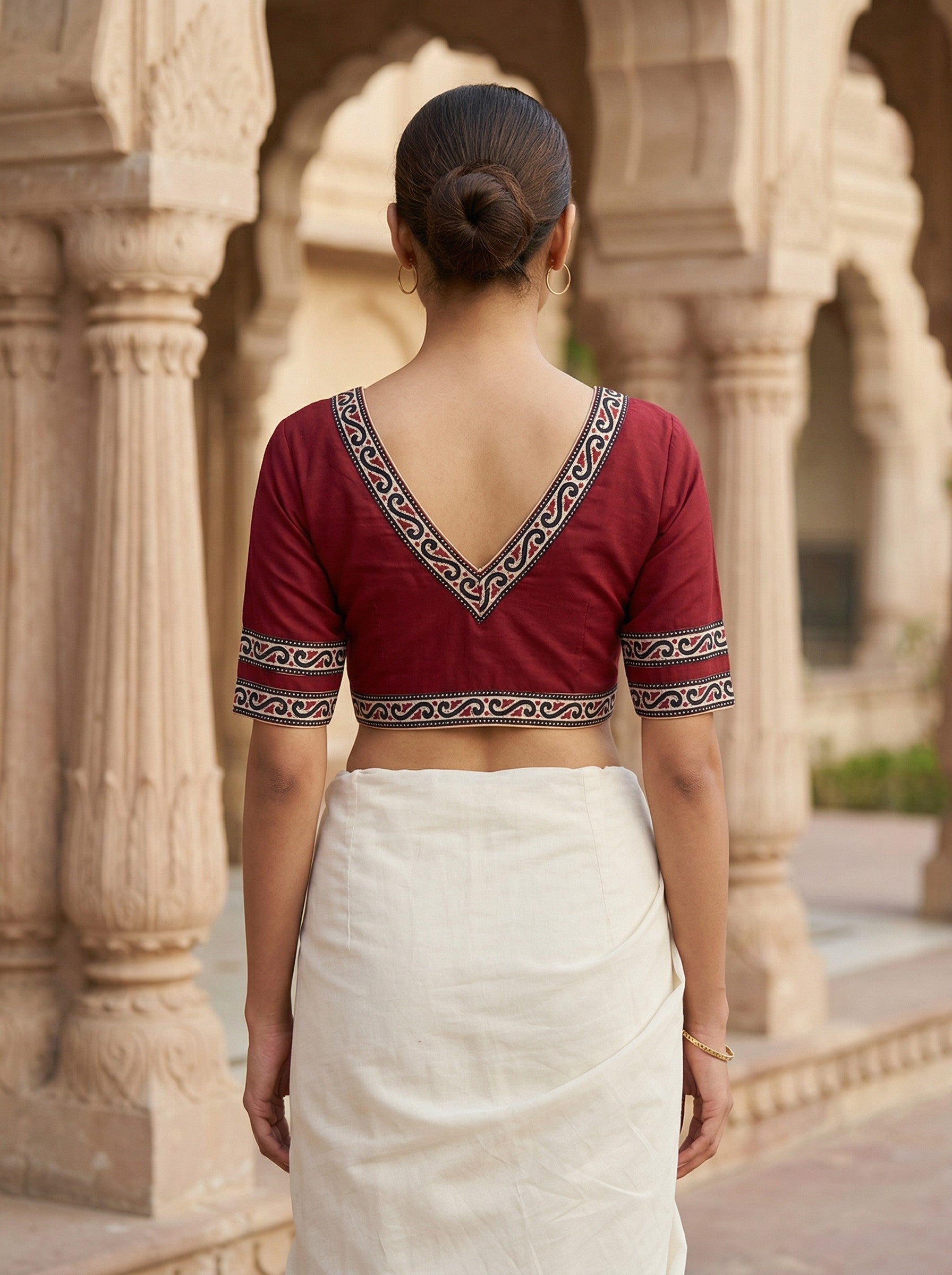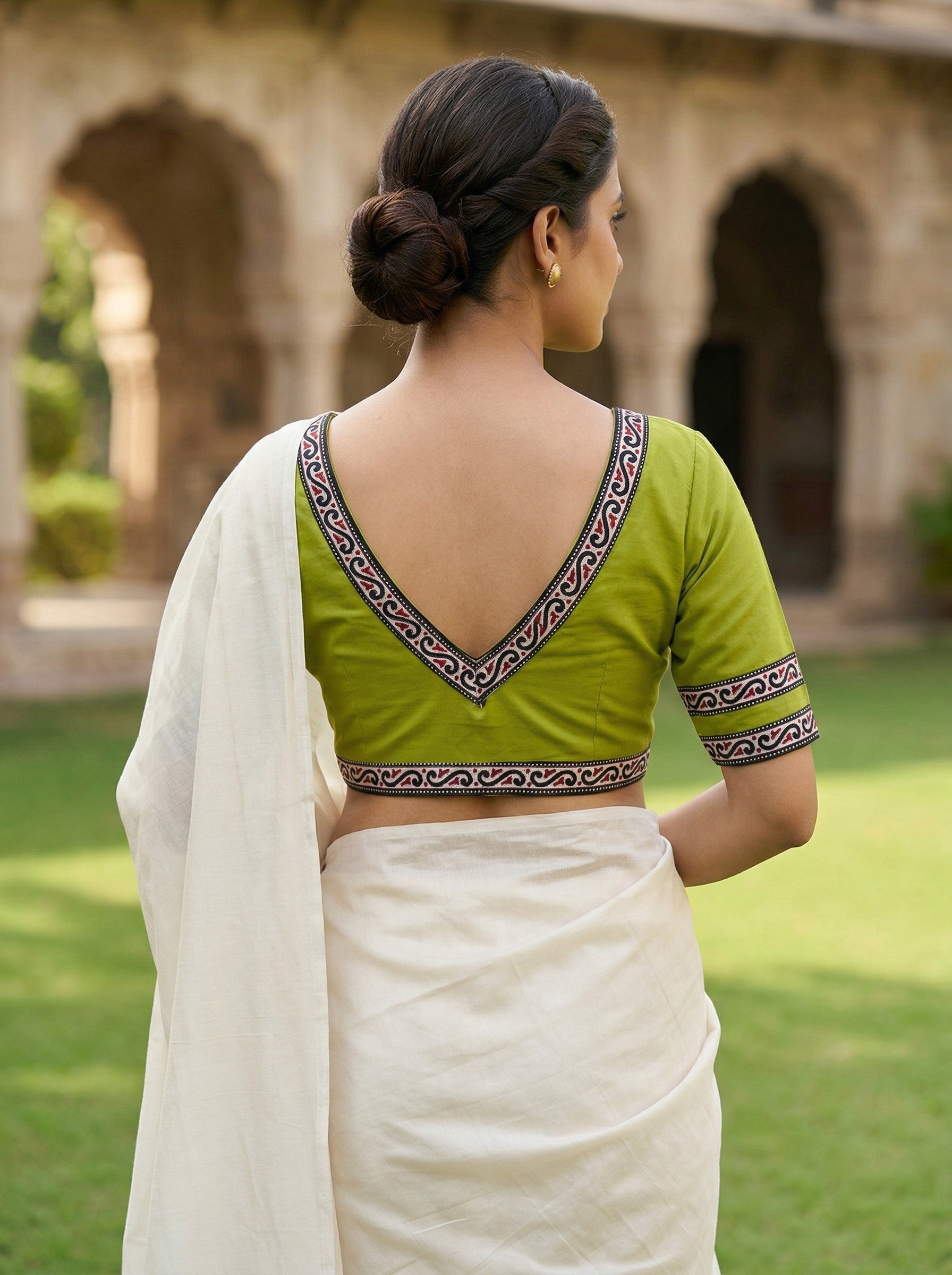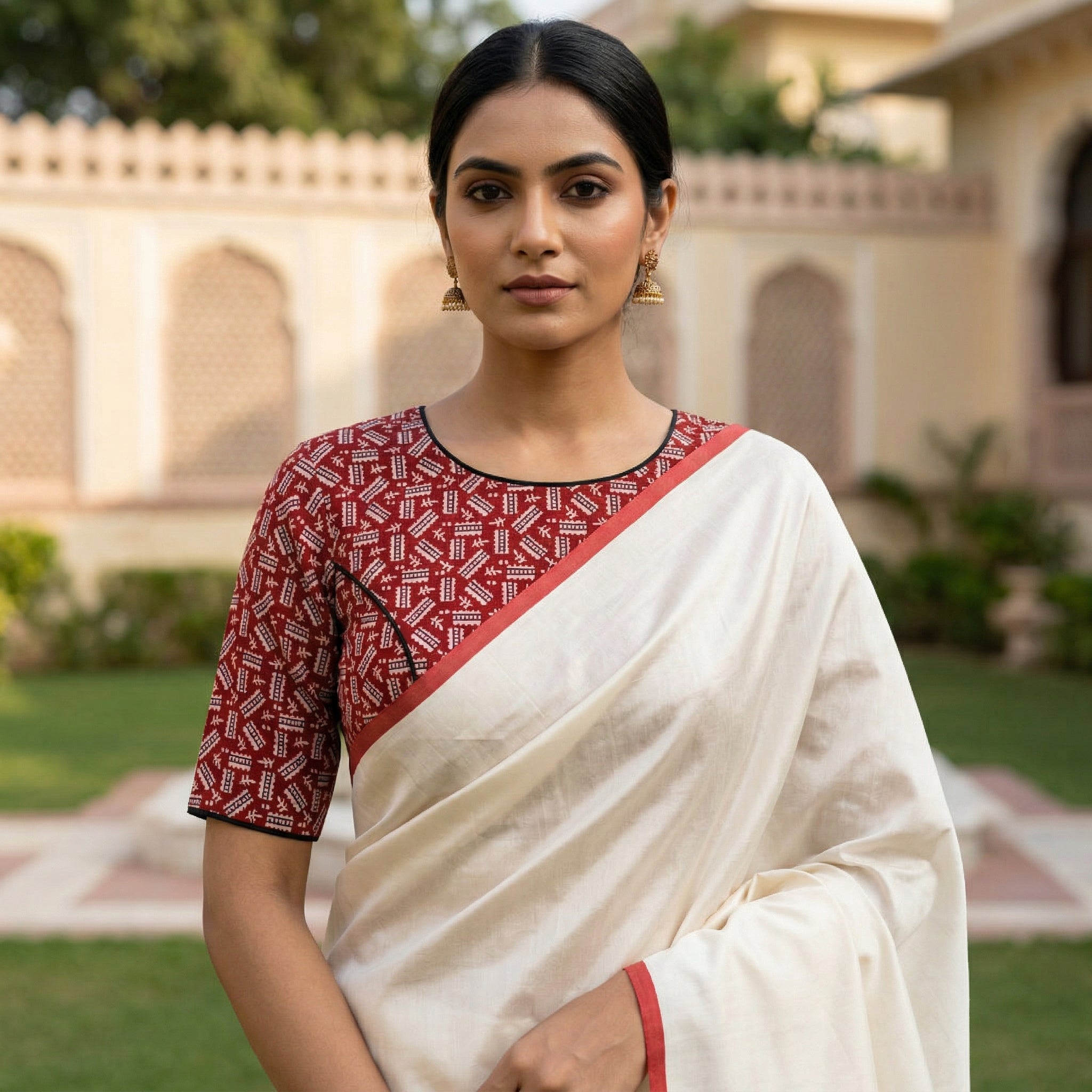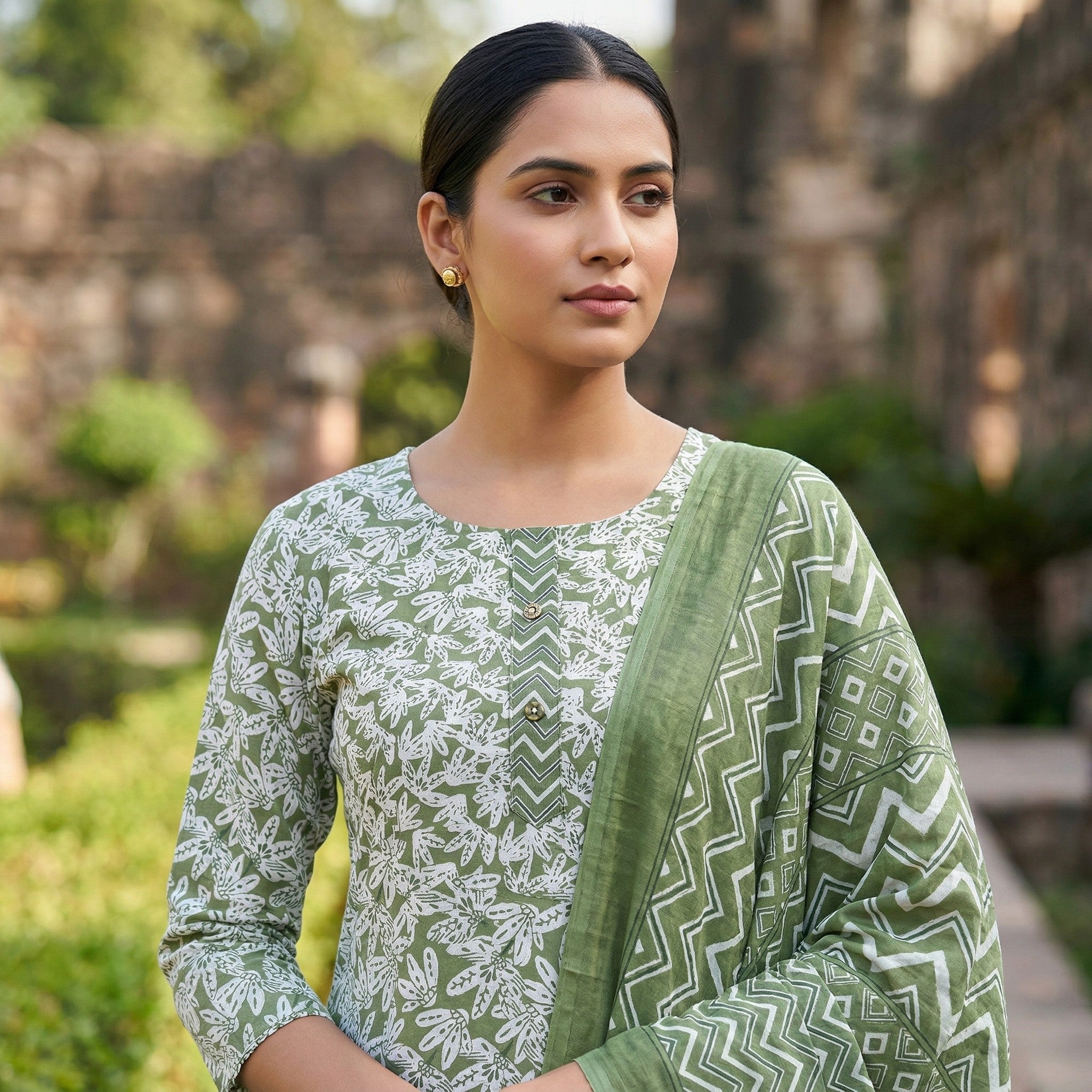
A Kanjivaram silk saree is one of those wardrobe pieces that carries its own history. It has weight. It has memory. And for a very long time, women in South India paired it with a matching silk blouse cut from the pallu itself, and that was the end of the conversation.
But something has been shifting quietly over the last three or four years. Walk into a wedding in Chennai or a reception in Bangalore and you will find at least one woman wearing a rich purple Kanjivaram with an Ajrakh block print cotton blouse in indigo and rust. She looks different. Slightly bolder. Comfortable in a way silk blouses rarely allow. And nine times out of ten, someone in the room is going to ask her where she got the blouse from.
This is the pairing we want to talk about today.
Why an Ajrakh blouse works so well with Kanjivaram
Kanjivaram silk is heavy. That is not a complaint, that is a fact. The fabric is thick, the zari is real, and by the time you have wrapped six yards around yourself in a Chennai summer, you understand why the older women in the family used to sit down under the fan the moment the pooja was over.
A cotton blouse takes about eighty percent of that heat away. Not exaggerating. Cotton breathes, cotton absorbs, and cotton lets air move against the skin in ways silk simply cannot. This alone is a good enough reason to consider one.
But comfort is not the whole story. Ajrakh is a resist-dyeing block print tradition from Kutch in Gujarat, done by Khatri families who have been passing the craft down for generations. The prints use natural dyes, mostly indigo blue, madder red, iron black, and pomegranate yellow, and the patterns are geometric with a slight organic irregularity because every stamp is done by hand.
When you place this next to a Kanjivaram, three things happen visually. The geometric print gives your eye a place to rest against the fluid silk pallu. The natural dye colours settle beautifully against gold zari. And the small imperfections of hand printing give the whole look a lived-in richness that a machine-made blouse never quite achieves.
Which colours to pair
This is where most women get stuck, and honestly, the internet is not very helpful here. Let us go through it properly.
Deep purple or maroon Kanjivaram: Try an indigo blue Ajrakh with madder red highlights. The blue cools down the warmth of the saree and the red picks up the border zari. This is our most requested pairing from customers in Chennai and Coimbatore.
Green Kanjivaram: A rust and indigo Ajrakh blouse is unbeatable. If your green is on the deeper side, closer to bottle green, you can also try a mustard Ajrakh. Something about mustard on green feels very old-school South Indian bridal, in a good way.
Red or pink Kanjivaram: This is where an indigo Ajrakh really shines. The blue and red combination is classical, appears in every Rajasthani miniature painting and every Bengali kantha work, and it lets the red of the saree stay the star.
Blue Kanjivaram: Go with a rust or madder red Ajrakh. Same tones, different colour. Keeps the whole look grounded.
Cream, off-white, or beige Kanjivaram: Almost any Ajrakh works. Indigo is safest, but a black Ajrakh with red details can look surprisingly elegant, especially for evening functions.
When to wear this combination and when not to
We will be honest with you. For a very traditional temple wedding where the elders in the family expect the silk blouse from the same saree, this pairing might raise a few eyebrows. That is fine at a reception or a wedding lunch. It is not fine at the muhurtham. Read the room.
For engagement functions, receptions, sangeeth nights, Diwali get-togethers, office festival days, and family dinners, an Ajrakh cotton blouse under a Kanjivaram is genuinely the right choice. It is comfortable, it looks considered, and it signals that you have style opinions of your own.
For Chennai, Bangalore, Hyderabad and Coimbatore weather, this pairing is honestly kinder to your body. A silk-on-silk Kanjivaram in April is a small act of endurance. Cotton makes it wearable.
What to look for when buying an Ajrakh blouse
Not all Ajrakh is the same. Here is what actually matters.
Look at the back of the fabric. In real hand block printing, the print bleeds through to the back of the fabric because the dye penetrates. In a screen-printed imitation, the back is mostly white or very faint. This one check tells you a lot.
Ask about the dyes. Natural dyes have a slight softness in tone. If a print looks screamingly bright, especially the red and yellow, it is probably chemical dye. That is not automatically bad, but for a Rs 1500 to Rs 2500 Ajrakh blouse you should be getting the real thing.
Feel the cotton. Good Ajrakh cotton has body. It is not thin like a handkerchief and it is not stiff like a curtain. Somewhere in between, with a slight coolness to the touch.
Check the tailoring. This is where a lot of online Ajrakh blouses fail. The print is beautiful, but the darts are wrong, the sleeves pucker, or the back is cut in a shape that fits nobody. Look for actual size measurements in inches on the product page, and make sure they include bust, shoulder, sleeve length and back length separately.
Care instructions that actually work
Wash your Ajrakh blouse in cold water for the first three washes. Only use a mild detergent, and please do not soak it. Ajrakh will lose a little colour in the first two washes, this is normal and does not mean the dye is bad, it means it is real.
Dry in shade. Direct sun will fade any natural dye faster than you would like.
For ironing, use a medium heat. Iron on the reverse if the print is very dense.
Do not dry clean unless the blouse has heavy embroidery or embellishment. Most cotton Ajrakh does better with gentle hand wash than with the chemicals used in dry cleaning.
Where we come in
At Sayani's Creation we work directly with Ajrakh sources so that when a blouse leaves our workshop in Shantiniketan, we can tell you honestly whether the fabric is naturally dyed and hand block printed. Not every blouse we sell is Ajrakh, but the ones that are, we know their story.
We also cut and tailor for Indian body types, sizes 30 to 44, with proper darts and adjustable back hooks. And because we ship a lot to Chennai, Bangalore, Hyderabad and Coimbatore, we have got the delivery time down to four or five working days for most South Indian cities. Cash on delivery available.
If you have a Kanjivaram sitting in your cupboard that you have been meaning to wear more often, an Ajrakh blouse might be exactly the thing that gets it out on more evenings. Have a look at our current collection and see if something calls to you.
Featured Product in this Article
 View
View
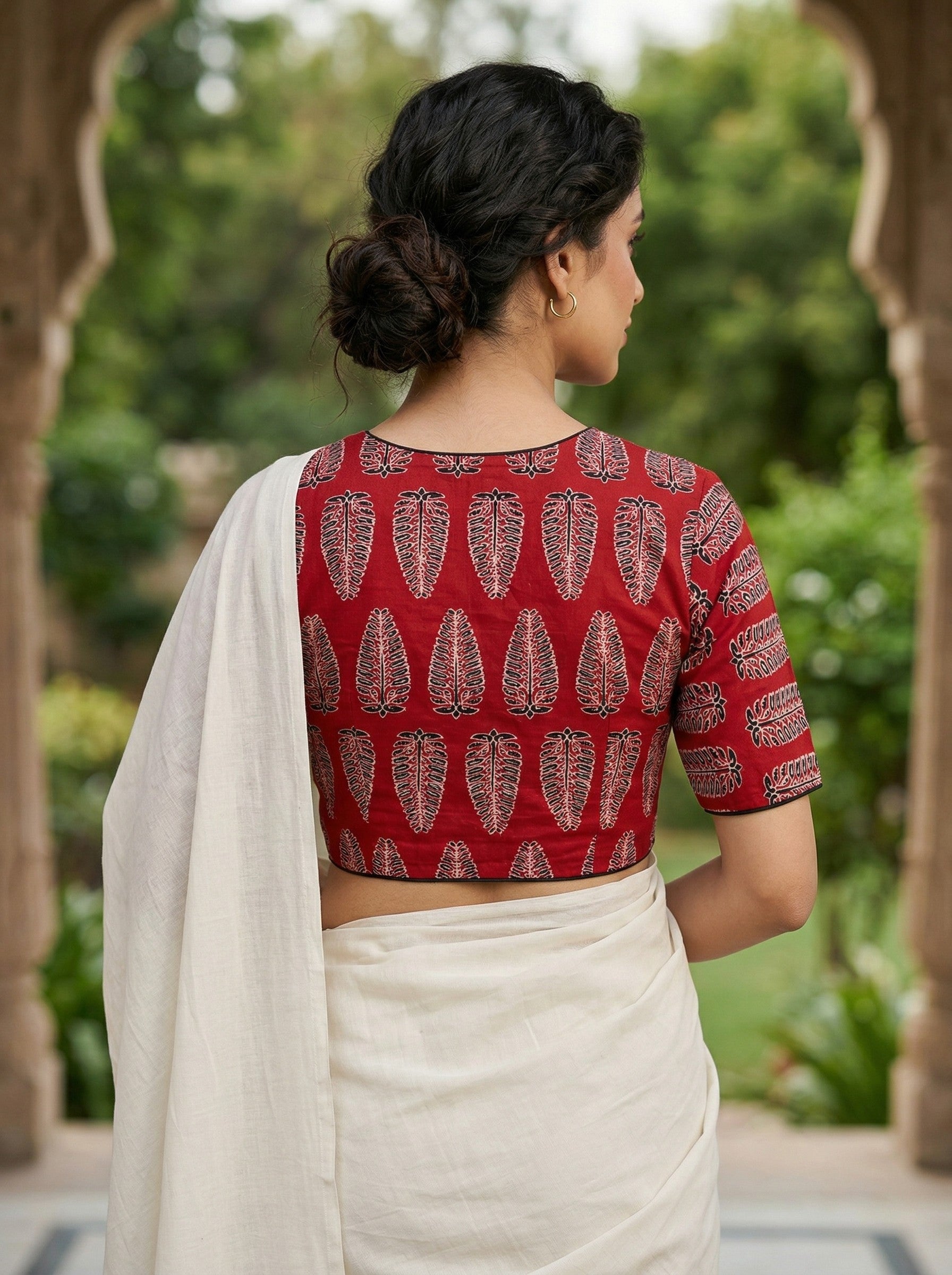
Red Ajrakh Leaf Printed Cotton Saree Blouse Online (Size 30–42)
Frequently asked questions
Can I wear an Ajrakh blouse to a traditional South Indian wedding?
Yes, at receptions, sangeet nights, and non-ceremony functions. For the actual muhurtham or a temple wedding, most families still expect the matching silk blouse. Ask the bride's family if you are the guest and not sure.
Will the Ajrakh print bleed on my Kanjivaram?
Not once it is properly washed and set. The first wash before wearing is important. After that, natural dyes are quite stable and you can wear white silk saree with a coloured Ajrakh blouse without worry.
How is Ajrakh different from other block prints?
Ajrakh uses a specific resist and mordant process with natural dyes, and the patterns are always geometric. Bagru, Sanganeri, Dabu and other block prints have different colour palettes and often use more floral or figurative motifs. Ajrakh has a distinctive earthy indigo-and-rust colour story you learn to recognise.
What sizes do you offer?
Our cotton blouses run from size 30 to size 44, with detailed measurement tables on every product page. If you are between sizes, we recommend going up.
Do you ship cash on delivery to South India?
Yes, we ship COD to Tamil Nadu, Karnataka, Andhra Pradesh, Telangana and Kerala. Delivery is usually four to five working days from Shantiniketan to any major South Indian city.